











You can start to alleviate your fear of the dentist right at the time of your appointment: tell us what you're afraid of, ask for an explanation of the examination, and agree on a signal to take a break. If the condition of your teeth allows, the treatment can be spread over several visits. When you know what to expect, how to control the pain, and when you can ask for a break, it's easier to take the first step.
If you're wondering how to overcome your fear of the dentist after an unpleasant experience or years of procrastination, start by setting an achievable goal: schedule an appointment. You don't need to know what procedures you need before you arrive, nor do you need to be prepared to do them all at once. First, you need to assess the condition of your teeth and discuss treatment options.
At MonDent, we care about each of our patients, including those for whom just coming to the office is a big challenge. It is important for us to tell you what concerns you, ask questions, and understand the proposed therapy. Talking about your fears is part of preparing for treatment.
Maybe you've been chewing on only one side for a while or choosing foods that won't cause pain. At the same time, the thought of an examination seems more difficult than the daily adjustment. That's when it helps to break the visit down into smaller steps: contact with the office, conversation, examination, and agreement on therapy.
Why does fear of the dentist occur?
Fear doesn't look the same for every patient. Some are afraid of injections, some of the sound of instruments, and some feel like they can't speak during the procedure. For others, the biggest worry is the uncertainty: they don't know how long the procedure will take, what they'll feel, and whether they'll be able to ask for a break.
A painful or unpleasant experience in the past can affect every subsequent visit. If you once felt like your dentist didn't listen to you, you may be worried today about the same situation happening again.
There is also the inconvenience of the condition of the teeth. After a long break, the patient may think more about how to explain their absence than about the examination itself. As a result, the appointment is postponed again, and questions and concerns remain unanswered.
At MonDent, we want to focus the conversation on your current condition and treatment options. Information about when you last had a check-up is useful for the assessment, and you should not feel uncomfortable about it.
Identify what bothers you the most
Before making an appointment, try finishing the sentence: “My biggest concern is…”
The answer can be quite specific:
- "I'm afraid the anesthesia won't work."
- "I can't stand it when I don't know what you're doing to me."
- "I'm worried that the tooth will have to be extracted."
- "I'm uncomfortable because I haven't had a checkup in years."
- "I'm afraid I won't be able to ask for a break."
You don't have to find just one reason. Write down two or three things that make it most difficult for you to go to the dentist and show them to the dentist. That way, the conversation can start with your real concerns.
If you don't know how to describe your fear, mention what usually happens to you before an appointment. For example, you put off calling the doctor's office or cancel an appointment at the last minute. That's important information too.
How to overcome fear of the dentist before the first appointment?
Preparation starts when you make your appointment. The staff can't know how difficult your arrival is unless you tell them. A brief note about your fears gives us the opportunity to discuss in advance what kind of support you need.
Tell me what you need.
When making an appointment, you can say:
"I've been putting off my appointment for a long time because I'm afraid of the procedure. I'd like us to first discuss the condition of my teeth and for you to explain each step to me before you begin."
Ask how much time is allotted for the visit and whether the first visit can be dedicated to a discussion, examination, and treatment planning. If you have pain, swelling, or other concerns, mention them immediately. This information helps the dentist assess the urgency and explain what requires earlier intervention.
If you find it easier to write than to talk on the phone, you can make your first contact by sending a message. State the reason for your call and ask the staff to explain the next step.
Describe any previous experience that is influencing your fear. The sentence "I felt pain before, but I didn't know how to stop the procedure" allows for a very concrete agreement before the procedure begins.
At MonDent, your questions and previous experiences are important in planning your visit. We want you to know why we are recommending a particular procedure and what you can expect during it.
Prepare a few questions
When you're upset, it's easy to forget what you wanted to ask. So prepare a short list:
- What needs to be done first and why?
- How will you control pain during the procedure?
- How long does the proposed procedure take?
- Can the therapy be spread over multiple visits?
- What can I expect after the intervention?
- What are the expected costs?
Uncertainty about cost can also be a reason for delay. Ask your dentist to explain the proposed plan and costs before you make a decision about treatment. If there are multiple treatment options, ask about their advantages and limitations.
When possible, choose an appointment so that you don't have to rush home from work or continue with important obligations immediately after the examination. Leave enough time to arrive and talk.

If you would like someone close to you to accompany you, check if they can come with you and where they can stay during the examination. Choose someone who is calm and listens to you, without retelling unpleasant experiences.
When looking for an answer to the question of how to overcome fear of the dentist, it is more useful to prepare questions for your appointment than to imagine all possible procedures in advance. What was necessary for another patient may not be necessary for you.
What can help while you are in the dentist's chair?
Before the examination begins, tell the dentist how you are feeling. If you need a few moments to settle in and ask questions, ask for them. This agreement made before the examination begins is especially important because you will not always be able to speak normally during the procedure.
Agree on a pause signal
Raising your hand can be a signal that you want to take a break. Arrange for the dentist to stop as soon as he or she has safely put down the instruments. Make sure you both understand the signal and use it whenever you need a break.
Give as much explanation as you want. Some patients are comfortable with a detailed description of each step. Others may find a brief announcement sufficient, such as, “We will now examine this tooth” or “Rinse will follow.”
You can ask your dentist to let you know before changing the chair position or starting a new procedure. If a particular sound or position particularly bothers you, mention it before the procedure.
While you wait for the session to begin, try to breathe slowly and evenly, without forcing deep breaths. Pay attention to your shoulders and hands, as we often unconsciously clench them when we are tense. If you are comfortable with the music, ask if you can use headphones so that you can still hear the instructions.
These arrangements help you participate in the visit and clearly communicate what you need. You don't have to wait until the discomfort becomes unbearable to see a dentist.
Report pain and discomfort
Local anesthesia is used to control pain. You may still feel touch, pressure, or vibration during some procedures. Before you begin, ask your dentist what sensations you can expect and how they will check that the area is sufficiently anesthetized.
If you feel sharp pain, give the agreed signal immediately. There is no need to suppress it in order to appear patient. The dentist needs to know what you are feeling in order to check the effect of the anesthesia and adjust the procedure.
Report any other difficulties, such as the need to swallow, jaw fatigue, or discomfort due to positioning. The more clearly you describe the problem, the easier it is to discuss possible adjustments.
If you are particularly concerned about root canal treatment, read our blog about Endodontics without fear and painLearning about the procedure can help you prepare questions, especially if you only know about the treatment from other people's experiences.
An important part of overcoming your fear of the dentist is to be open about how you feel during your visit. A successful visit doesn't mean you never ask for a break.
What does returning to the dentist look like after a long break?
The first examination is to determine the current condition and create a plan. You cannot reliably estimate the number of interventions needed by looking at your teeth in the mirror. Likewise, a damaged tooth does not automatically mean that it needs to be extracted.
The dentist will ask you about your symptoms, previous treatments, health conditions, and medications you are taking. Have this information ready, and if you have previous findings or x-rays, ask if you need to bring them.
After the examination, and if necessary, additional diagnostics, treatment options are discussed. Within the conservative dentistry Caries and dental pulp diseases are treated, with the aim of preserving natural teeth.
When surgery is necessary, the dentist explains the reason and treatment options within the framework of oral surgeryIf extraction is recommended, you can find additional information in the text. Tooth extraction: process, recovery and tips.
Ask that the plan clearly answers three questions: what needs to be addressed first, what comes next, and how many visits are expected. It is easier to think about one appointment than about all possible interventions at once.
When your condition allows, discuss gradual treatment and the amount of work you can handle during one visit. The schedule should be aligned with your treatment needs, so make the decision together with your dentist.
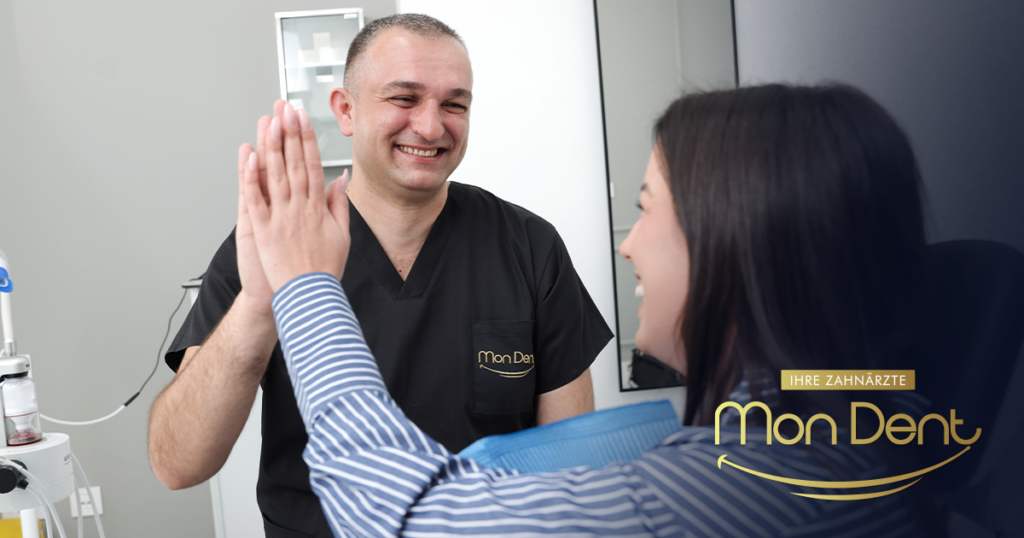
At MonDent, it is important to us that the patient understands their treatment plan. If the explanation is not clear, ask again. The names of the procedures may sound complicated, but you should know what is being suggested, why, and what the next step is.
If you're trying to figure out how to overcome your fear of the dentist after a year-long hiatus, measure your progress in small, completed steps. You've made an appointment, come in for a checkup, asked a question, or had a scheduled procedure. Each of these steps is important.
At the end of the visit, tell us what helped you and what was difficult. This way, the next visit can be better tailored to your needs.
What when the fear is too strong?
If you are constantly canceling appointments or are unable to even endure an examination due to fear, please mention this when contacting the practice. Additional support and options to make treatment more bearable should be discussed.
For severe dental phobia, the help of a psychologist, including cognitive-behavioral therapy, may be useful. The goal is to work on the thoughts, reactions, and avoidance that make treatment difficult.
The question of how to overcome fear of the dentist in these situations requires an individual approach. What makes the examination easy enough for one patient may be just the first step for another.
In certain situations, sedation is considered. Its use depends on the health condition, the planned procedure, and the conditions in which the treatment is performed. You can read more about this option in ADIVA text about sedation and fear of the dentistThe availability and suitability of sedation should be checked directly with the practice.
Do not take sedatives on your own before your appointment. If you are already using them as recommended by your doctor, inform your dentist and follow the agreed-upon instructions.
Say how much fear influences your behavior. The sentence “I have already canceled appointments several times because I couldn’t come” provides useful information for planning support.
Frequently asked questions
How to overcome fear of the dentist after a bad experience?
Explain to the dentist what happened earlier and what worries you most now. Agree on an explanation of the procedure, a pause signal, and a step-by-step treatment plan. If fear prevents the examination, seek professional psychological support.
Can the first visit be just a check-up?
You can request that your first visit be dedicated to a discussion, examination, and treatment plan. This is agreed upon when making your appointment. If you have pain or swelling, your dentist will assess whether treatment should be started immediately.
What if I feel pain despite the anesthesia?
Give the agreed signal immediately. The dentist will stop as soon as it is safe to do so, check the effect of the anesthesia, and adjust the procedure as necessary. Sharp pain should not be ignored.
Is it embarrassing to come after several years without a check-up?
No. Tell us how long it has been since your last visit and what problems you are experiencing. This information helps the dentist assess your condition and suggest next steps.
Conclusion
You don't have to wait until your fear is completely gone to schedule an appointment. To begin, it's enough to explain what you're worried about and find out what your first visit will be like.
If you're still wondering how to overcome your fear of the dentist, start with a text or a call. Say that you need support and would like to discuss your exam before starting treatment.
At MonDent, we care about your oral health and how you feel during your visit. Our goal is for you to be heard, to understand the proposed procedures, and to know that you can ask a question or request a break.
Contact MonDent and schedule an appointment.When making your appointment, please emphasize what scares you, so that we can start a conversation about your needs before you arrive at the office.


 BA
BA DE
DE SL
SL EN
EN ZH
ZH it_IT
it_IT