









Content:
- Why is there a fear of teeth grinding and how to overcome it?
- How is teeth grinding for crowns performed?
- Using modern technologies
- Hygiene and dental maintenance before permanent restoration
- Conclusion
Grinding teeth for crowns is a standard dental procedure during which the dentist carefully reshapes the surface of your natural tooth to create adequate space for the permanent placement of a dental crown. Although the very word “grinding” immediately causes discomfort and pain for most patients, it is important to immediately emphasize that this procedure in modern dentistry is performed under strong local anesthesia, making it a completely painless and comfortable experience.
Many patients put off visiting the dentist for a long time because they are afraid of damaging their natural teeth, worried about how they will look while waiting for permanent work, or afraid of the sound of the instruments. That's why we decided to debunk all the misconceptions in detail and explain why this procedure is the key, safe, and best way to restore full health and beauty to your smile.
Why is there a fear of teeth grinding and how to overcome it?
Fear of dental procedures is deeply rooted and completely natural, especially when it comes to procedures that are little talked about in everyday life. Patients often come to the office burdened with misinformation. Most of their questions and dilemmas relate to the presence of pain, the preservation of remaining healthy tooth substance, as well as the drastic disruption of facial aesthetics before the final crowns are placed.
Fear of pain and dental instruments
When we think of dental repair, the first association is often pain. However, thanks to the progress of modern dentistry and the use of powerful local anesthetics, the feeling of pain has been completely eliminated. During the intervention, the patient may feel:
- Mild vibrations from the dental appliance.
- Cooling with water that rinses the treated area.
- Gentle pressure of the instrument on the tooth.
What you will definitely not feel is any sharpness or discomfort. The dentist always begins the process only after making sure that the tooth is completely numb, carefully dosing the anesthetic according to your individual tolerance.
Concerns about the health and strength of the natural tooth
The question is often asked whether the tooth is actually “destroyed” by this procedure. The reality is quite different. The tooth is ground only to the extent that is technologically necessary for the crown to fit perfectly into your dental arch and so that it does not look artificial or too bulky. By removing the surface layer, the dentist creates an ideal base. Over this ground part comes the crown, which is permanently cemented and which actually protects your natural tooth underneath from further decay, breakage, caries and external influences.
What will the teeth look like immediately after grinding?
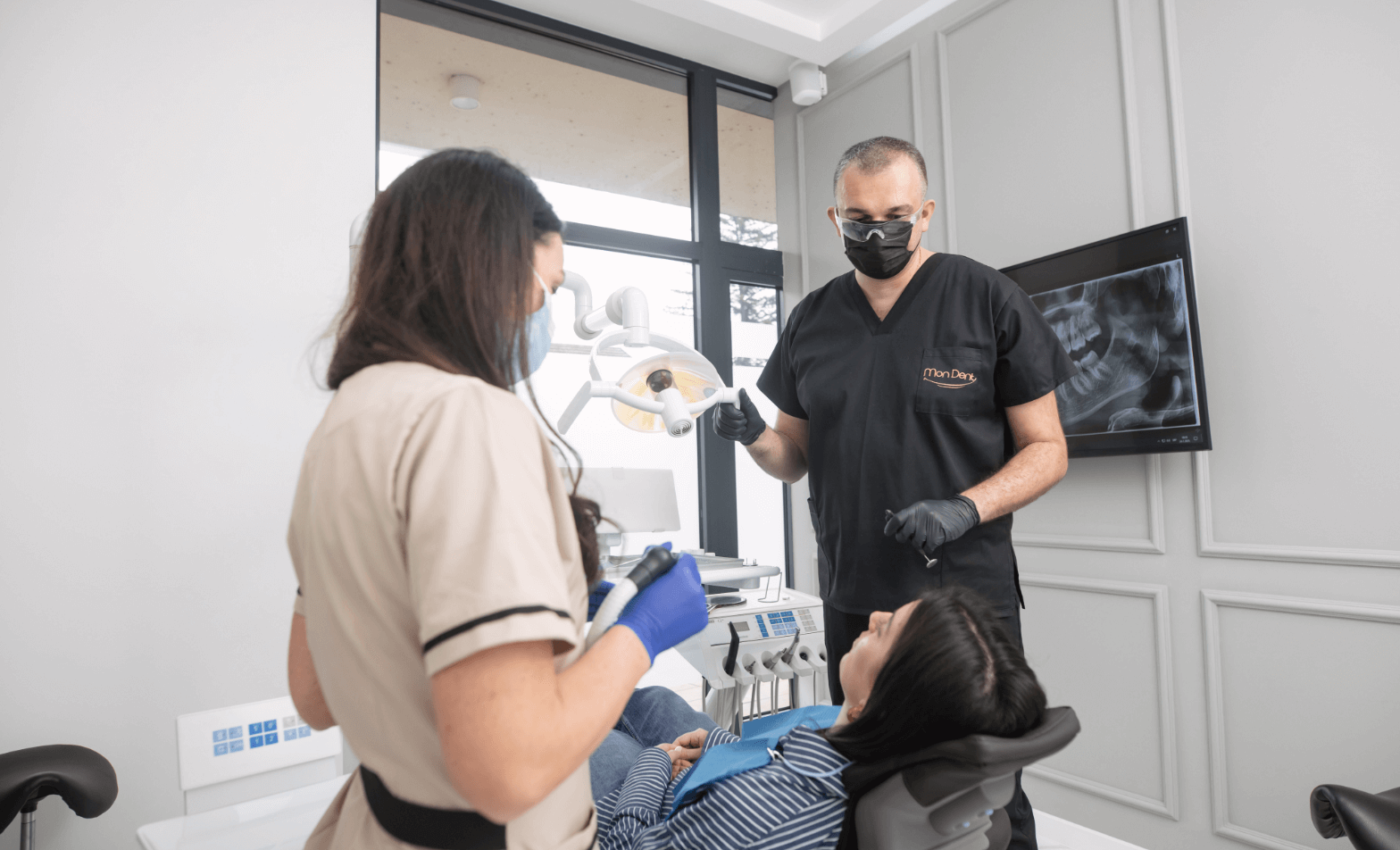
One of the biggest fears is related to aesthetics. A chipped tooth usually resembles a small wedge-shaped stump, which creates panic in patients who are wondering how they will go to work or appear in public during therapy. Dental practice today involves a top level of aesthetics at every step, which means that a patient never leaves the office without a tooth. Immediately after chipping, you receive temporary crowns that look very natural and faithfully imitate real teeth until the permanent work is completed.
Detailed process: How is teeth grinding for crowns performed?
Understanding the entire workflow can significantly reduce the anxiety you feel before your appointment. The process itself is extremely precise and requires a high level of expertise and calmness from the dentist.
Step by step to a new smile
Preparation of teeth for prosthetic work takes place through several clearly defined phases:
- Detailed examination and analysis of the X-ray image: The dentist must be sure that the tooth root and surrounding bone are completely healthy.
- Anesthesia application: It ensures completely comfortable work and eliminates any possibility of pain.
- Careful tooth reshaping: Special instruments are used to remove the enamel layer and part of the dentin from all sides of the tooth. The goal of this procedure is to create a small step (groove) in the gum area, where the crown will ideally fit, thus preventing food and bacteria from entering underneath it.
- Taking a print: A precise impression of your jaw is taken, based on which the technician makes your crown.
If you want to get a complete picture of what awaits you from the beginning to the end of this therapy, research in detail. zirconia crown installation process, where every step from taking the first impression to the final cementation is explained.
Teeth grinding for veneers duration: How much time do you spend in the office?
When planning to grind teeth for crowns, the duration of the procedure varies significantly depending on the number of teeth being treated, their position, and the specific situation in your mouth. If you are preparing only one tooth, the process usually takes between 30 and 45 minutes. If it is necessary to do a complete dental arch or work on a larger number of teeth at the same time, the procedure can take several hours. Dentists are aware that sitting with your mouth open for long periods of time can be tiring, which is why regular breaks are taken to ensure maximum comfort. Top precision takes time, and rushing is definitely not an option here, because the longevity and stability of the future crown directly depend on proper grinding.

Modern technologies: Grinding teeth for zirconia crowns
The development of new materials in the dental industry has brought revolutionary changes, especially in the anterior regions where aesthetics are an absolute priority. For this purpose, materials that meet the highest biological and visual standards are primarily used today.
Why are zirconia crowns a special choice?
Zirconium is a modern, high-performance material that incredibly mimics the natural translucency and light reflection of real teeth. Unlike older metal-ceramic options that had a gray metal base, zirconium does not leave an unsightly black edge along the gums after prolonged wear and is completely biocompatible, meaning that the human body perfectly accepts it without allergic reactions. To learn more about these superior materials and their benefits, read in detail What are zirconia dental crowns? and you will understand why they are the gold standard of cosmetic dentistry today.
Less invasive approach
When specifically grinding teeth for zirconium crowns, the dentist and the patient have a huge advantage. Zirconium is characterized by exceptional mechanical strength and resistance, which is why the crowns themselves can be made in a significantly thinner layer without losing their durability. This directly means that the dentist removes a significantly smaller layer of natural tooth compared to classic crowns. Maximum preservation of your natural tooth tissue is the primary goal of every modern dental treatment.
Preservation of function and aesthetics during therapy
The period between tooth grinding and the placement of permanent crowns usually lasts from a few days to two weeks, depending on the complexity of the work. During this sensitive period, your ground teeth must not be left unprotected.
The role and importance of temporary crowns
Temporary crowns are an indispensable part of the treatment and are made immediately after grinding in the office. They have multiple functions:
- They physically cover the exposed part of the tooth and prevent painful sensitivity to hot and cold drinks.
- They aesthetically close the space in the dental arch so that you can communicate and smile without any obstruction.
- They mechanically preserve space for permanent work, preventing neighboring teeth from moving.
- They keep the gums in a healthy position while waiting for the final work from the laboratory.
Hygiene and dental maintenance before permanent restoration
Many patients wonder how they should treat their teeth while wearing temporary restorations. Hygiene during this transitional period is crucial to the success of the entire treatment.
How to care for chipped teeth at home?
While wearing temporary crowns, it is recommended that you adjust your daily habits according to the following rules:
- Careful brushing: Brush your teeth regularly, using a soft toothbrush, without applying brute force around the gums.
- Correct use of the end: Dental floss is recommended, but be sure to pull it out sideways. Do not pull it up, as this can accidentally dislodge the temporary crown.
- Customized diet: Be sure to avoid extremely hard, tough, or very sticky foods such as caramels, gummy candies, or nuts that could damage or peel the work.
Conclusion
Fear of dentists and complex procedures is completely justified, given that little is often known about the technical details. However, an informed patient is a relaxed patient. The fact is that teeth grinding is performed under the strict supervision of a doctor, completely painlessly and with a clear goal – to preserve your oral health in the long term. Whether you are planning to save just one damaged tooth or are considering a complete smile transformation with zirconia crowns, a professional team will ensure that the process goes without stress.
Postponing interventions due to fear usually leads to bigger problems and requires more complex solutions in the future. Modern materials, reliable anesthetics and advanced techniques allow us to work with a minimally invasive approach, leaving trauma and pain in the past. It's yours to make the decision, and leave the entire care to experienced professionals who understand your dilemmas. It's time to shine again with maximum confidence. Make an appointment today and allow us to create together the smile you've always dreamed of.


 BA
BA DE
DE SL
SL EN
EN ZH
ZH it_IT
it_IT