









Content:
- What is periodontal disease and how does this disease occur?
- How to recognize periodontitis in time?
- What are the main risk factors for developing this disease?
- Is periodontitis curable?
- Periodontal treatment: Modern and painless steps at MonDent clinic
- Periodontal disease and cavities – how to compensate for teeth
- The “do it yourself” method is not the solution
- Prevention of periodontal disease
- Conclusion
Bleeding gums when brushing your teeth, chronic bad breath, receding gums and increased tooth sensitivity are the first and foremost symptoms that clearly indicate that you may have gum disease developing in your mouth. periodontal diseaseMany patients experience great fear and panic when they first notice blood in their saliva after brushing their teeth or when they notice that their teeth visually appear longer than before. Ignoring these signs can lead to serious complications and permanent tooth loss.
Early recognition of the problem means that a solution exists and that the process can be successfully controlled. The MonDent team will provide you with medically accurate answers to the questions of what exactly is happening in your mouth, how the disease is kept under control, and why there is absolutely no reason to fear if you contact a professional dental team in time.
What exactly is periodontal disease and how does this disease occur?
To understand how to protect your smile, we need to know what we're dealing with. Periodontal disease is serious, chronic bacterial infection which attacks and destroys the supporting structure of the teeth. This supporting structure consists of your gums, periodontal ligament (the fibers that hold the tooth to the bone), and the jawbone itself. The disease never develops overnight. It all starts with inadequate oral hygiene and the accumulation of dental plaque on the surface of the teeth.
Plaque is a sticky, colorless layer of bacteria that forms on your teeth every day. If it’s not removed by regular brushing, minerals from your saliva harden it into tartar. Tartar is extremely hard and impossible to remove with a regular toothbrush at home. It creates an ideal, rough surface for bacteria to build up. These bacteria produce toxins that irritate your gums, triggering an immune response that leads to chronic inflammation. Over time, this inflammation can spread deep below the gum line, destroying the bone that supports your teeth.
Stages of disease development: From mild redness to loosening of teeth
Periodontal disease progresses through several specific stages, and it is crucial to recognize it in the earliest stages. The process occurs in the following order:
- Gingivitis (gum inflammation): This is the only stage in which the process is completely reversible. The gums are red, slightly swollen, and bleed when touched or when brushing the teeth. The bone is not yet infected. With professional cleaning in the office and improved home hygiene, gingivitis is easily remedied.
- Periodontal wound: The inflammation spreads from the gums to the bone. There is initial bone loss around the teeth and the formation of so-called periodontal pockets – spaces between the teeth and gums where bacteria and food debris accumulate.
- Moderate and advanced periodontitis: Bone is rapidly lost. Periodontal pockets become deeper, often oozing pus, and teeth begin to lose support. Patients at this stage notice a change in tooth position, tooth spacing, and pronounced loosening.
How to recognize the problem in time: Main symptoms of periodontitis
Patients often overlook the early signs because the disease usually does not cause any pain in its early stages. Pain is often the last signal that the situation has become critical. Therefore, it is crucial to pay attention to the following changes in the oral cavity.
Bleeding gums when brushing (Red flag number one)
Healthy gums are light pink, firm to the touch, and never bleed, even when brushing vigorously with a hard toothbrush. The appearance of blood on the toothbrush, in the saliva after rinsing the mouth, or on the dental floss is a clear and unambiguous sign of the presence of inflammation. Many patients then make the mistake of stopping brushing that area of the tooth out of fear, which further worsens the accumulation of bacteria and accelerates the disease.
Receding gums and exposed roots
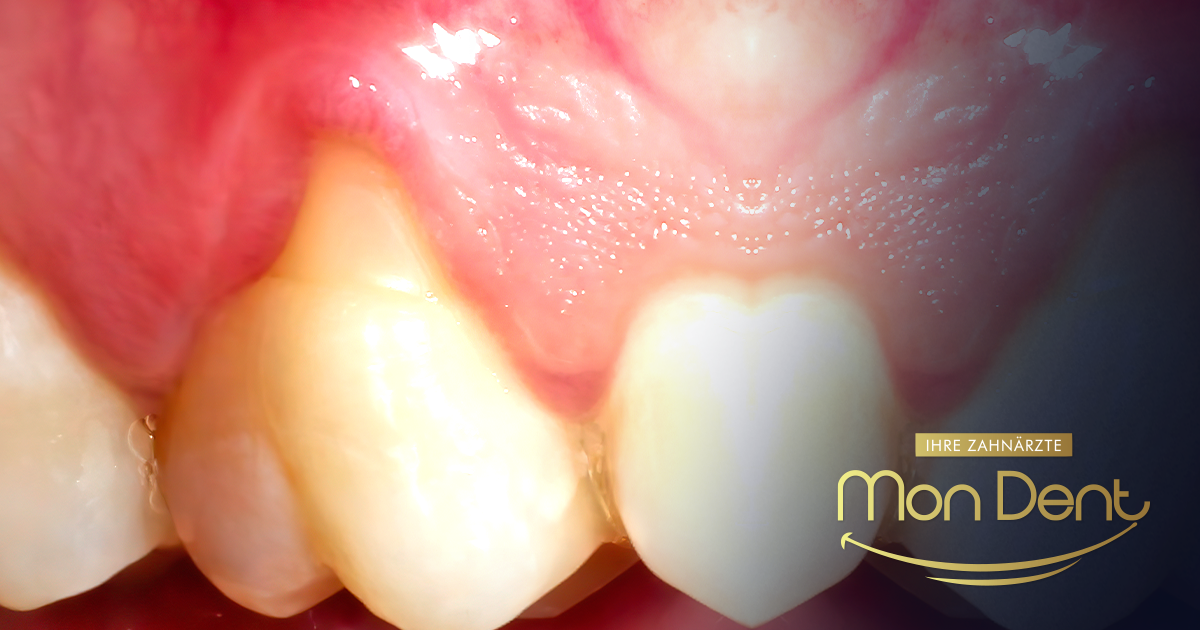
One of the most visually noticeable symptoms is receding gums. The gums recede towards the roots of the teeth, making the teeth appear visually elongated. The exposed root of the tooth lacks protective enamel, making the teeth extremely sensitive to cold, hot, sweet or sour drinks and foods.
Constant bad breath that doesn't go away (Halitosis)
Bacteria present in deep periodontal pockets produce specific sulfur compounds. These compounds cause extremely unpleasant breath that is chronic. Brushing your teeth, using chewing gum or mouthwash only provides short-term, superficial relief. The real cause of the problem remains hidden deep below the gums.
Change in bite and foreign body sensation
As the bone melts, your teeth lose their support. You may notice that your teeth no longer fit together the same way they used to. When chewing harder foods, you may feel like your tooth is loose or that your gums are sore and tingling in that area.
What are the main risk factors for developing this disease?
Although poor oral hygiene is the primary trigger, there are certain factors that make patients significantly more susceptible to the rapid development of periodontal disease. These factors should be given special attention:
- Genetic predisposition: If your parents lost their teeth early due to gum disease, your personal risk is significantly higher and requires more frequent check-ups.
- Smoking: Nicotine constricts blood vessels in the gums, reducing blood flow, which means that smokers' gums often don't bleed at all. The disease progresses completely unnoticed, and the patient only sees a dentist when the teeth start to loosen.
- Systemic diseases (especially diabetes): High blood sugar levels make it more difficult for the body to fight infections, so periodontal disease is much more aggressive in diabetics.
- Stress and poor diet: A decline in immunity reduces the body's resistance to bacteria in the oral cavity.
Is periodontal disease curable? The truth you need to know
One of the absolutely most common questions asked by patients who sit in the dentist's chair with fear is: Is periodontitis curable? The professional, medically accurate and completely honest answer is that it is a chronic disease. This means that periodontal disease cannot be completely cured in the sense that the lost bone around the teeth can naturally and on its own return to its original state.
The good news is that the disease can be treated extremely successfully. stop, stabilize and control in the long term.
When the problem is diagnosed in the early or middle stages, modern periodontology offers a range of solutions that completely block further tissue decay. Your smile can remain functional, strong and aesthetically appealing for decades, provided you strictly follow your dentist's instructions.
Periodontal treatment: Modern and painless steps at MonDent clinic
Fear of dental procedures and pain often prevents patients from seeking help. Modern periodontal treatment at MonDent clinic is completely painless, performed under local anesthesia and is maximally adjusted to the comfort of each individual patient. Therapy is carried out through strictly defined protocols:
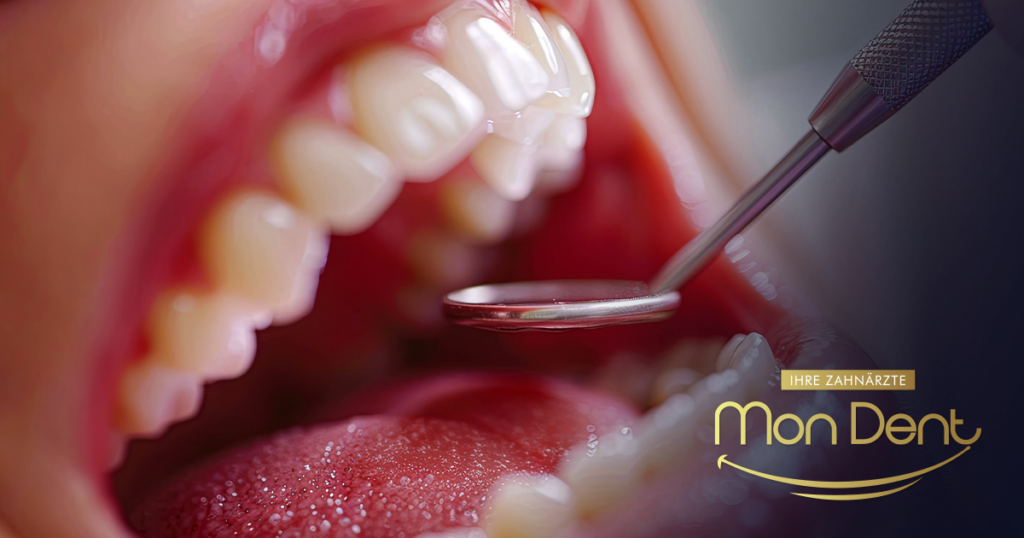
- Detailed and precise diagnostics: Treatment always begins with a thorough examination. Using a periodontal probe, we carefully measure the depth of the pockets around each tooth. The normal depth of the space between the tooth and the gum is up to 3 millimeters; anything over that indicates the presence of pockets. After that, an orthopan or 3D scan of all teeth is taken to precisely analyze the percentage of bone that has been irreversibly lost.
- Causal therapy (Deep cleansing): This is the foundation of any periodontal treatment. The procedure involves the professional removal of hard dental deposits (calculus) above and below the gum line using ultrasound equipment. Then, curettage or treatment of periodontal pockets is performed. Under anesthesia, the dentist uses special instruments to polish the root of the tooth smoothly, removing all bacteria, infected tissue and toxins deep within the pocket.
- Surgical methods and regeneration: In situations where the pockets are extremely deep (over 6 millimeters) and cannot be accessed with conservative methods, minor surgical interventions are performed. The gums are slightly lifted to create open access to the root and bone, the area is thoroughly cleaned, and if necessary, artificial bone and membranes are applied to encourage tissue regeneration.
- Maintenance phase: After active treatment, the patient moves into a phase of regular monitoring and professional cleaning to prevent the disease from returning.
Periodontal disease and crowns: How to restore teeth and restore your smile
When the disease reaches its most severe stage, where the teeth become too loose and must be extracted for the health of the rest of the jaw, patients enter a state of despair. The main concern becomes the fear of wearing complete removable dentures (jaws). Topic periodontitis and braces (fixed prosthetic restorations in the form of crowns and bridges) is of great interest, as patients want fixed teeth that look and function like natural teeth.
If periodontal therapy has been successful and the inflammation has subsided, the remaining healthy and strong teeth can be used as abutments for dental bridges. The dentist will prepare these teeth, and the laboratory will fabricate a highly aesthetic ceramic or zirconium bridge that bridges the empty space and restores your full chewing function.
In situations where there are not enough remaining teeth to support a bridge, modern implantology offers fantastic solutions. If there is sufficient quality remaining bone, titanium implants are placed in place of the extracted teeth. Ceramic crowns are later placed on these implants. Fixed implant work gives patients back their completely lost self-confidence.
Why are DIY methods and natural remedies not the solution?
Always first make an appointment with the dentist when you notice symptoms of periodontal disease, before you start googling. While browsing the internet, you've probably come across hundreds of articles and forums offering miraculous solutions such as rinsing your mouth with baking soda, gargling with olive or sunflower oil, drinking various herbal teas, or rubbing essential oils on your gums. It's important to approach this information with a great deal of caution.
These natural remedies can soothe superficial symptoms, reduce immediate redness, and freshen breath for a short time. They absolutely cannot remove hard tartar that is mechanically attached to the tooth, nor can they clean deep periodontal pockets where the main focus of infection is actually located. Relying solely on home methods gives bacteria precious time to destroy the bone around your teeth without interruption and irreversibly. Natural remedies are an excellent adjunct therapy for maintaining hygiene at home, but only after a dentist has professionally and mechanically removed the cause of the problem. Professional intervention is the only correct and proven path to health.
Prevention: How to preserve treatment results
The success of periodontal treatment depends fifty percent on the work of the dentist in the office, and fifty percent on the patient's efforts at home. Regular oral hygiene must become your most important daily routine. Using a regular toothbrush cleans only three surfaces of the teeth, while the sides between the teeth remain untouched. This is where periodontal disease most often begins.
For long-term gum health, your home care should include the following tools:
- Interdental brushes: Small brushes specially designed to enter the spaces between teeth and mechanically remove plaque from places that a regular toothbrush cannot reach.
- Dental floss: Essential for tight spaces between front teeth where an interdental brush cannot pass.
- Oral irrigator (Waterpik): A device that uses water pressure to flush food debris and bacteria from shallow periodontal pockets and massages the gums.
- Soft toothbrushes: Hard toothbrushes further damage already receding gums. Using soft bristles and proper brushing technique protects the tissue from mechanical trauma.
- Regular visits to the dentist: Professional scaling and polishing of teeth every three to four months ensures that bacteria do not accumulate in dangerous amounts.
Conclusion
Gum disease is a serious and progressive medical problem, but you have the absolute power to stop it. The first and most important step is to stop ignoring the clear signals your body is sending you. Bleeding gums, sensitivity, and bad breath will not go away on their own. Early dental check-ups drastically shorten treatment time, significantly reduce the financial costs of therapy, and most importantly – save your natural teeth from falling out.
The professional team at MonDent Clinic has extensive experience, modern equipment and immense patience. We are here to provide you with safe, completely painless and highly effective therapy that is individually tailored to your current condition. Don't let fear or misinformation rule your health. Schedule your appointment on time., get rid of your problems and get back a smile you can completely trust.


 BA
BA DE
DE SL
SL EN
EN ZH
ZH it_IT
it_IT