









Content:
- What is a partial denture?
- Why does a partial denture start to hurt?
- How to prevent these problems?
- Conclusion
For many people who have lost several teeth, partial dentures are the first and most practical solution. They are made quickly, are not too expensive and restore a smile in just a few days. However, after a while, many patients begin to notice problems such as pain, slipping of the denture, loose clasps or even cracks. If you are experiencing similar discomfort or are afraid that this will happen, you are not alone – these are common challenges that many face.
In this article, we will take a candid look at the most common questions: why do dentures suddenly start to hurt, why do they move, and how to prevent it from ever happening again. Most of these inconveniences can be resolved in just one or two visits, often even on the same day. If you recognize yourself in these descriptions, don’t hesitate – Make an appointment at MonDent dental officeContact your dentist on time and don't let problems escalate.
What is a partial denture and why do some people "break" after just a year or two?
A partial denture is a removable structure that replaces one or more missing teeth, relying on the remaining natural teeth and gums. It allows for normal chewing, speech, and aesthetic appearance, but requires regular denture careThere are two main types:
- Acrylic partial denture: Made of pink plastic, this variant is cheaper and thicker, ideal for temporary solutions.
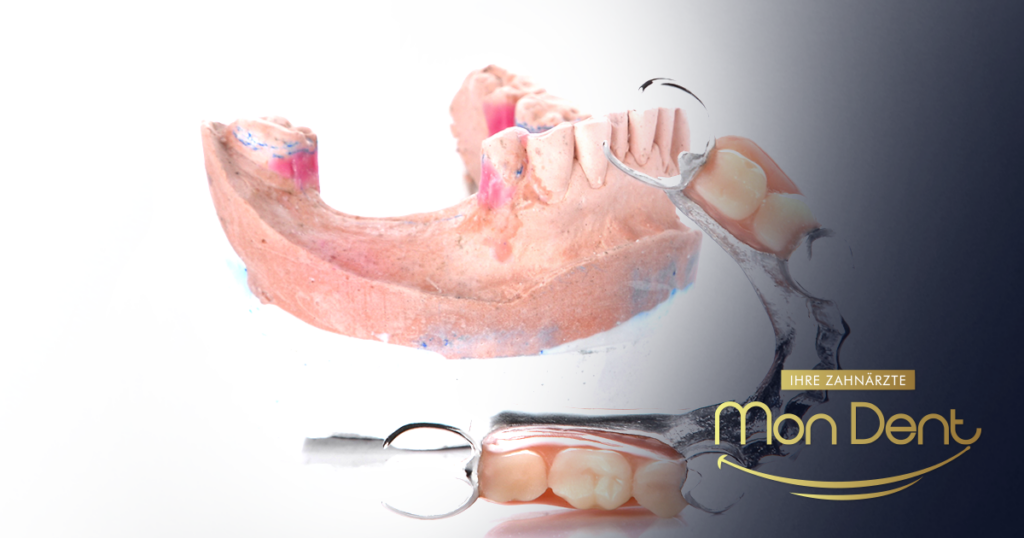
- Skeletonized partial denture (wizil): With a thin metal base, it is more comfortable, stable and long-lasting, especially for patients looking for better functionality.
As long as the gums and bone are stable, the denture functions perfectly. However, after a tooth is extracted, the bone naturally begins to resorb (melt), which is a normal process in every person. This leads to a loss of support, and the denture no longer fits perfectly. Factors such as poor hygiene, improper diet or genetic predisposition can accelerate this process, leading to problems after just 1–2 years. Regular check-ups can prevent this, allowing for timely corrections.
Pain and discomfort – why does a partial denture suddenly start to hurt?
Patients often tell us, “Doctor, six months ago it was perfect, and now it hurts every time I bite down on something hard.” The pain is usually caused by pressure points under the denture – the gums recede, the bone shrinks, and the denture remains in place, pressing on sensitive areas where there is no longer any natural “cushion.” This can lead to gum inflammation, redness, sores or even chronic burning.
At MonDent, we offer effective solutions tailored to your situation:
- Denture lining: Quick and easy – we add soft or hard material for better support, which is done within 24 hours, and the pain disappears immediately.
- Laser therapy: For more severe inflammation, we use a laser to calm the tissue without cutting or suturing – patients go home the same day with no discomfort.
- New prosthesis: If your dentures are more than 4–5 years old, we recommend having a new one made based on the current jaw impression. Our loyal patients always receive a discount.
To prevent worsening, maintain good oral hygiene and avoid inflammatory factors.
Slipping dentures and loose clasps – “like they’re dancing in my mouth”
Another common complaint is, “I have to keep pushing my dentures back with my finger.” Over time, the clasps wear out, the teeth they attach to shift by a millimeter or two, and the bone thins, leading to instability. This can cause discomfort when speaking, eating, or even the fear that the dentures will fall out at an inopportune moment.
Temporary solutions include:
- Tightening or replacing fasteners: We do this while you wait in the waiting room, restoring stability immediately.
- Adding precision clips: For skeletal dentures, we add hidden clasps for a better grip.
For a long-term solution, we recommend installation of 2–4 mini implants per jaw – the prosthesis is then fastened to them and remains immobile. Patients who have had this done say they forget they are wearing it, enjoying a normal life.
Damage to dentures
Acrylic dentures often crack in the middle if you bite down on something hard or drop them, while metal dentures can break or have teeth fall out. This can be frustrating, especially if it happens unexpectedly.
The repair is quick – we use cold polymer or laser welding, restoring the prosthesis to perfect condition in just a few hours. If the prosthesis is older than 7–8 years and has already been repaired several times, it is better to invest in a new one.
How to prevent these problems?
In our experience, 90% of problems can be prevented with timely intervention. Additional prevention tips:
- Remove your dentures at night and store them in water with cleaning tablets to prevent bacteria buildup.
- Wash it with a soft brush and avoid biting nails, ice, or hard objects.
- If you feel even the slightest pressure or discomfort, come immediately – a small wound can turn into a serious ulcer in just 2–3 days.
- Maintain a balanced diet rich in calcium and vitamins to preserve bones.
Conclusion
Partial dentures don't have to be a source of constant frustration. With proper care, regular adjustments, and modern solutions like mini implants, you can wear them for years without any problems. At MonDent, we are dedicated to providing you with fast, painless, and affordable solutions.
Don't endure the discomfort for a moment longer. Make an appointment in our dental office MonDent and solve your dental problems. We are waiting for you at MonDent with a smile!


 BA
BA DE
DE SL
SL EN
EN ZH
ZH it_IT
it_IT