










Content:
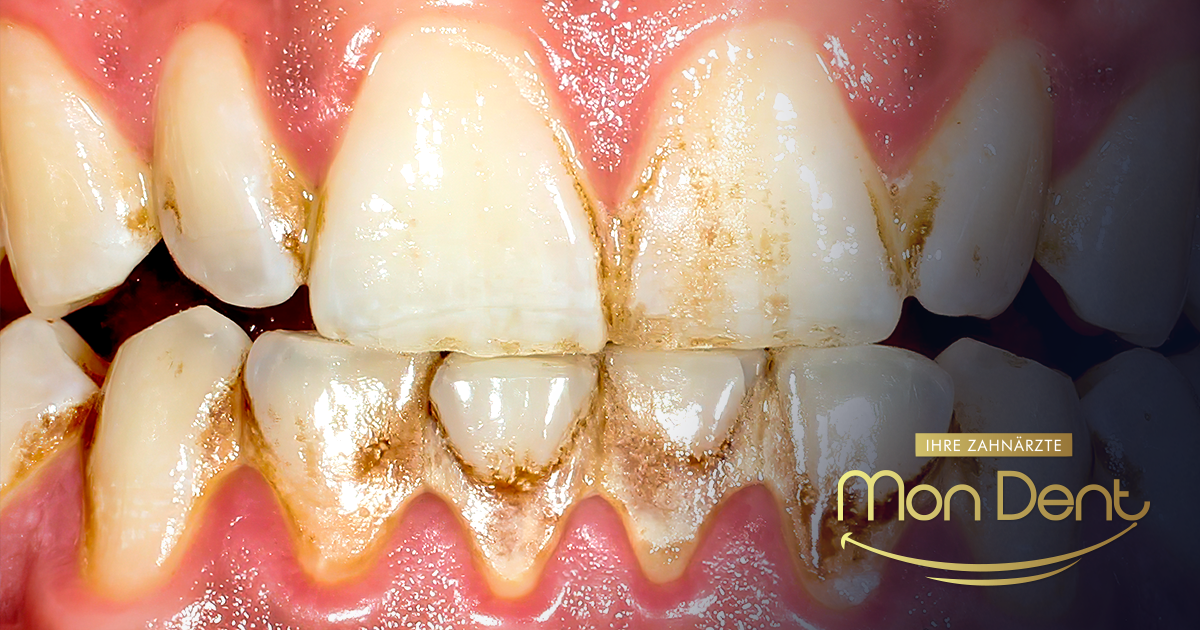
Tartar on the teeth is hardened plaque – a mineralized layer of bacterial deposits that accumulates on the surface of the teeth and along the gums. Hard tartar adheres very tightly to the tooth, creating a rough surface and containing a lot of harmful bacteria. This is why it is impossible to remove it with a regular toothbrush at home. As soon as plaque begins to accumulate, a risk immediately arises: the bacteria in the tartar secrete acids that damage the enamel and irritate the gums.
The most common way to remove tartar is through professional tartar removal. At MonDent Dental Clinic Easily schedule an examination and consultation and have your teeth professionally cleaned.
How does tartar form on teeth?
The process of tartar formation begins with the formation of plaque – a sticky, colourless substance rich in bacteria that forms on the teeth after each meal. If plaque is not removed by regular brushing and flossing, it can begin to harden into tartar within 4–12 hours. Under the influence of minerals in saliva, plaque gradually hardens and turns into tartar. Tartar usually first appears along the gum line and in the spaces between the teeth, where it is most difficult to reach with a toothbrush.
The accumulation of scale is influenced by:
- Oral hygiene: Infrequent and improper brushing of teeth or failure to floss allows for constant plaque growth.
- Nutrition: Foods and drinks rich in sugar and starch feed plaque bacteria, so consuming them too frequently promotes tartar formation.
- Smoking: Smokers are known to have more tartar because smoke encourages the deposition of plaque.
- Genetics and hormones: Some people are genetically more likely to form plaque and tartar, and hormonal changes (e.g. pregnancy) further increase the risk.
All of this together means that many people, especially adults and the elderly, accumulate stones more quickly.

Why is tartar on teeth dangerous?
The presence of tartar can lead to numerous problems. The rough surface of tartar can easily captures more plaque and pigments, so the teeth become yellow and the breath becomes more unpleasant. In addition to aesthetic problems, tartar on the teeth is also a path to disease: bacteria in the tartar irritate the gums - gingivitis occurs, which is the first stage of periodontal disease. If the condition is not treated, gingivitis turns into periodontitis, in which the gums recede, periodontal pockets full of bacteria are created and, in the long run, tooth loss can occur. Tartar on the teeth also increases the risk of cavities: the acids of the bacteria can eat away at the enamel and cause tooth decay. In short, the accumulation of tartar is associated with cavities, gum disease and consequences for the entire body (e.g. periodontitis is associated with heart disease and diabetes). That is why it is important to remove it in a timely manner - without it, you are fighting a battle with everyday malfunctions and inflammations.
How to prevent limescale buildup?
The best defense is consistent oral hygiene and healthy habits.
- Regular and proper brushing: Brush your teeth at least twice a day, in the morning and before bed, for at least two minutes each time. Use a soft-bristled toothbrush and fluoride toothpaste. Brush all surfaces of your teeth – front, back and chewing surfaces – and especially the gum line where plaque accumulates the most. It’s also a good idea to use an electric toothbrush occasionally, which can remove plaque more effectively.
- Cleaning with dental floss: A toothbrush can't reach all the areas between your teeth - this is where dental floss or interdental brushes come in handy. Floss at least once a day (e.g. in the evening) to remove plaque from areas your toothbrush can't reach. This will help prevent tartar from forming in those hard-to-reach areas.
- Mouthwash: Using an antibacterial mouthwash occasionally can help reduce the number of plaque bacteria. Choose a mouthwash that suits your needs (e.g., one with fluoride or an antiseptic formula) and use it as directed.
- Healthy diet: Limit snacks and sugary foods between meals. If you do snack at night, make sure to brush your teeth before bed. Choose balanced meals that include vegetables, fruits, and dairy products. These foods help neutralize acids and strengthen enamel.
- Regular check-ups at the dentist: Go for preventive check-ups at least every 3–6 months. Your dentist will professionally clean your teeth and remove any early plaque that you can't see. Check-ups can detect early signs of cavities and gum disease – this is especially important because it's easier to prevent problems than to treat them.
- Quitting smoking: Smoking not only accelerates the formation of tartar, but also slows down the healing of the gums. By quitting smoking, you reduce the risk of gingivitis, periodontitis and other serious gum diseases.
Note: In addition to limescale, it is important to pay attention to dental caries. First of all, teeth must be healthy – any decayed tooth easily becomes a source of bacteria. This way, you ensure that your smile is healthy and radiant inside and out.
Professional limescale removal
If tartar has already hardened on your teeth, the only safe way to remove it is to visit a dentist. Professional stone cleaning is a routine procedure by which a dental professional removes all hard deposits from teeth.
- Preparation and review: The dentist will first examine your teeth and gums to determine where the tartar has accumulated. Based on this, he will plan the further procedure.
- Ultrasonic removal: A special ultrasonic device is used to break up tartar on the surface of the teeth using vibrations. This part of the treatment is usually painless and rarely requires local anesthesia. You will only feel a slight vibration as the device works on the tartar near the gums.
- Hand instruments: After the ultrasound, the dentist and dental hygienist use curettage and scaling to carefully remove any remaining tartar, especially from between the teeth and along the gumline. This ensures that the teeth are completely clean and smooth.
- Sandblasting and polishing: Once the tartar has been removed, the teeth are blasted with a jet of fine-grained sand and water (Air Flow). This removes any remaining stains from coffee, tea and cigarettes, as well as any soft plaque that has remained on the teeth. The teeth are then polished with paste – new deposits are less likely to accumulate on a smooth, polished surface. After polishing, the teeth are visibly smoother, whiter and your smile looks fresher.

Professional descaling not only removes visible deposits, but protects gums and enamelRegular cleanings prevent tartar buildup, gingivitis and periodontitis, and keep teeth healthier and brighter. Our team at MonDent emphasizes that maintaining smooth tooth surfaces preserves their health and aesthetics in the long term.
Deep cleaning (curettage)
If you have gum inflammation or deep periodontal pockets, the dentist may recommend deep cleaning or kiretazu. This is a procedure in which tartar is removed not only from the visible surface of the tooth, but also from the space under the gums (periodontal pockets). Curettage is performed when classic cleaning cannot completely resolve the problem – for example, in patients with gingivitis or periodontitis. During curettage, the root of the tooth below the gum level is thoroughly cleaned to remove bacterial deposits that cause inflammation.
After a deep cleaning, the gums become more tightly attached to the teeth, which reduces periodontal pockets. Removing tartar from under the gums slows down the progression of periodontitis and prevents bone loss around the teeth. In other words, curettage treats and prevents serious gum problems. The dentist will give special instructions for oral care after the procedure to maintain the positive effect and keep the teeth stable.
Conclusion
Tartar on your teeth can be a big problem, but with timely prevention and treatment, you can keep it under control. It is crucial to understand that tartar on your teeth does not form overnight, but ignoring it can lead to gum inflammation, cavities and tooth loss. Therefore, adopt good hygiene habits – brush your teeth properly, floss and regularly come for professional cleaning. At MonDent, we use modern and gentle techniques (ultrasound, sandblasting and polishing) to make tartar removal comfortable and completely painless. Our team of experts takes care of every step of the treatment and ensures that after cleaning your teeth are smooth, white and protected for a longer period.
If you notice tartar or want to take preventative care of your teeth, don't wait. Make an appointment at MonDent dental office to professionally remove tartar deposits and maintain the health of your smile. Our dentists will provide you with all the necessary information and advice, and arrange an appointment at a time that suits you. Your smile deserves top-notch care – we are here to keep it healthy and bright!
FAQ – Frequently Asked Questions
How can I remove tartar that has already formed on my teeth?
Tartar can only be removed by professional cleaning by a dentist. It is successfully removed with an ultrasonic device, manual curettage instruments, sandblasting and polishing. It cannot be removed at home by brushing or flossing.
Is scaling painful?
No. Scaling procedures are generally painless. Ultrasound and sandblasting are not painful – the patient only feels a slight vibration or a jet of water. Sometimes local anesthesia can be applied if the gums are very sensitive, but usually the treatment is quite comfortable.
How often should professional limescale cleaning be done?
For most people, scaling and flossing is recommended every 3 to 6 months. This depends on individual needs: people prone to plaque or with inflamed gums may need to go more often. Your dentist will advise on the optimal schedule for your visit.
Can baking soda remove tartar?
Baking soda paste helps remove plaque and surface stains (e.g. coffee stains), but cannot remove hardened tartarBaking soda gives a little freshness and brightens your teeth, but stubborn tartar must be removed professionally.
What is the difference between tartar and caries?
Tartar is mineralized plaque – a hard deposit on teeth – while tooth decay is tooth decay (a hole in the enamel) caused by the acids of bacteria. Tartar can cause and worsen tooth decay, but it cannot be covered with a filling like tooth decay. Removing tartar and preventing tooth decay go hand in hand to keep your teeth healthy.


 BA
BA DE
DE SL
SL EN
EN ZH
ZH it_IT
it_IT