









Content:
- What is teeth grinding?
- What causes teeth grinding?
- Symptoms of nighttime teeth grinding
- How to prevent teeth grinding?
- Teeth grinding in children
- Conclusion
The most efficient and fastest solution to prevent teeth grinding, is the creation of an individual protective foil (splint) that you wear during the night, while simultaneously recognizing and reducing stress. This transparent, perfectly fitted foil prevents direct contact between the upper and lower teeth, which instantly stops their wear and relieves the enormous pressure on the jaw joint.
In addition to regularly wearing a splint, a permanent solution to the problem often requires relaxing the muscles before sleep, correcting the malocclusion at the dentist, and changing certain lifestyle habits.
At MonDent dental offices in Banja Luka and Germany, we help patients every day to protect their teeth from this unconscious, but extremely destructive process. Below, we explain in detail what actually causes this problem, how to recognize the symptoms in time, and what specific steps you need to take to protect your smile, as well as the smile of your youngest ones.
What is teeth grinding (bruxism)?
Teeth grinding, medically known as bruxism, is the unconscious clenching, grinding, or grinding of teeth together. This condition can occur during the day (diurnal bruxism), but is much more common and dangerous. grinding teeth in sleep (nocturnal bruxism). Since it occurs while we sleep, patients are often unaware of the problem until their partner points out unusual and loud sounds coming from their mouth or until they notice the physical consequences on their teeth and jaw in the morning.
The forces generated by nighttime teeth grinding can be up to six times stronger than those we use during normal chewing. Therefore, the consequences for tooth enamel, facial muscles, and the jaw joint are often very serious if not addressed in time.
What causes teeth grinding?
To successfully stop the problem and prevent further damage, we need to understand its root cause. Patients often ask our dentists during check-ups what causes teeth grinding. The answer usually lies in a combination of psychological, physical and genetic factors. The most important causes are:
- Chronic stress and anxiety: This is by far the most common trigger in the modern era. Accumulated nervousness and tension during the day manifests itself at night through jaw muscle spasms.
- Malocclusion (improper bite): If the upper and lower teeth do not fit together properly due to missing teeth or poor alignment, the jaw instinctively tries to find a comfortable position by grinding its teeth during sleep.
- Sleep disorders: Conditions such as sleep apnea (brief cessation of breathing during sleep) and snoring are closely linked to nocturnal bruxism.
- Life habits: Excessive consumption of caffeine, alcohol, cigarette smoking, or the use of certain medications (especially antidepressants) can significantly increase muscle activity during the night.
Do you suspect that stress is destroying your teeth? Schedule an appointment in our office. Our expert team will assess the condition of your tooth enamel and suggest the best solution for you.
Symptoms of nighttime teeth grinding: How to recognize the problem?
Since patients are fast asleep while the process is taking place, recognizing symptoms is key for early diagnosis. What are the main symptoms of nighttime teeth grinding that you need to pay attention to?
- Pain and numbness in the jaw immediately upon waking: The muscles of the face and neck are overtired from all-night, continuous spasms.
- Morning headaches: The pain often spreads from the temples to the back of the head, neck, and ears, and patients often confuse it with a migraine.
- Tooth sensitivity to hot and cold: Due to mechanical wear of tooth enamel, dentin (the inner, sensitive part of the tooth) becomes exposed, which causes sharp pain when consuming cold drinks or hot coffee.
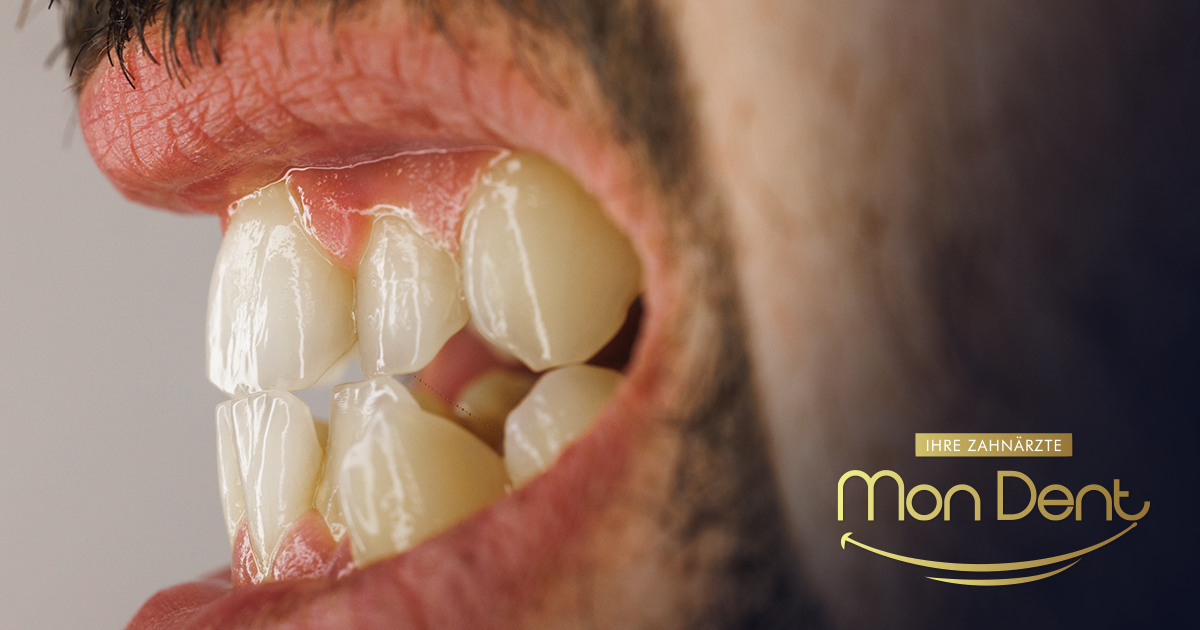
- Visible tooth damage: Over time, teeth become unusually straight, shorter, and their edges appear ragged, translucent, or cracked.
- Ear pain: Due to the proximity of the temporomandibular joint (TMJ) and the ear, pain is often reflected in the hearing aid, even though there is no medical problem with the ear itself.

Health effects of chronic bruxism
If ignored, bruxism becomes a chronic condition that leaves permanent and painful consequences on the entire masticatory system. What are the long-term health effects of chronic bruxism?
- Permanent damage to tooth enamel and tooth loss: The enormous friction forces literally "eat" away at tooth enamel. Over time, teeth weaken, become more susceptible to cavities, and can even crack the entire tooth lengthwise (fracture), which often leads to the need for tooth extraction.
- Destruction of dental work: Strong and uncontrolled squeezing can lead to cracking of expensive ceramic crowns, bridges, aesthetic veneers or loss of fillings.
- Jaw joint diseases (TMJ disorders): The constant pressure irreversibly damages the articular cartilage. Patients report a clicking sensation in the jaw, a clicking sound when opening the mouth, and even occasional painful locking of the jaw.
In order to accurately determine whether night clenching has already damaged the tooth root or the bone structure of the jaw joint, we at MonDent use the most modern diagnostics. Our dental x-ray with minimal radiation allows us to get a detailed 3D insight into your oral health with maximum safety.
How to prevent teeth grinding: The most effective treatments
When patients notice a problem or their partner wakes them up in the middle of the night because of noise, the main question becomes how to prevent teeth grindingPrevention of damage and treatment itself require a combined, individual approach.
1. Making a protective foil (night guard)
This is the first, most important, and fastest line of defense. Many patients wonder what the best mouthguards available are for preventing teeth grinding. The answer is unequivocal: they are exclusively individually made dental splints.
Unlike universal, cheap mouthguards that are purchased at pharmacies or sports stores and that often fall out during the night, irritate your gums or interfere with breathing, individual splints are made based on a precise impression of your teeth. They fit perfectly, are extremely comfortable to wear and distribute pressure evenly. If you are wondering where to buy customized night guards for bruxism in Bosnia and Herzegovina, MonDent dental practice in Banja Luka offers fast production of top-quality mouthguards made of the highest quality materials.
2. Overbite correction
If the dentist determines during the examination that your teeth do not fit properly, orthodontic therapy (fixed dentures or clear aligners) will be recommended. It is also often necessary to replace old, inadequate fillings and worn-out crowns that interfere with a proper bite and force the jaw into an unnatural position.
3. Muscle relaxation and stress reduction techniques
Since stress is the main trigger for this problem, relaxing methods before bed are strongly recommended. These include taking a warm bath, reading a book, gently massaging the jaw muscles, avoiding screens (phones and televisions) for at least an hour before bed, and drastically reducing your intake of caffeine, energy drinks, and alcohol in the evening.
Schedule an appointment and protect your teeth on time! Come for a consultation at MonDent practice so that we can create an individual splint for you in a timely manner and prevent expensive repairs in the future.
Teeth grinding in children: Should parents be concerned?
Particular concern and fear in our practice is caused by teeth grinding in childrenParents often come to the office in a panic because at night they hear a very loud, intense, and unpleasant grinding of their child's teeth from the child's room, which sounds like breaking glass.
The good news is that teeth grinding in sleep in children a very common and mostly harmless occurrence, especially in preschool age (between 3 and 6 years of age). In the absolute majority of cases, this is just a transient phase of development that leaves no lasting consequences and which children simply outgrow without any medical intervention.

Why does teeth grinding occur in children during sleep?
The main reasons for the occurrence of bruxism in the youngest are:
- Dentition: Whether baby teeth or the first permanent teeth are erupting, children subconsciously rub their teeth to relieve itching, pain, and tension in inflamed gums.
- Change in bite: The loss of baby teeth and the growth of permanent teeth changes the entire architecture of a child's jaw, and children unconsciously try to find a new "comfortable" chewing position.
- Stress and mood: A child's nervous system is sensitive. Changing daycare, the arrival of a new family member, starting school, or spending too much time in front of screens and video games before bed can cause a lot of tension that is released at night.
- Enlarged tonsils and difficulty breathing: Medical research shows that children who breathe through their mouths, have frequent ear infections, or have problems with their third tonsil (adenoids) grind their teeth significantly more often during sleep.
When is dental intervention necessary?
Although children usually outgrow this habit as their permanent teeth erupt, it is necessary to schedule a dental examination if you notice the following:
- The child wakes up with a headache or complains of pain in the teeth and jaw when chewing breakfast.
- You notice visible and worrying wear, yellowing (exposed dentin), and cracking of your baby teeth.
- The grinding does not stop even after all permanent teeth have erupted (after the age of 10 or 12).
In these specific situations, a pediatric dentist may recommend a custom, soft children's dental foil or refer the child to an orthodontist to correct the bite.
Conclusion
SPrevent pain and save your teeth! Nighttime teeth grinding doesn't have to ruin your smile and cause daily pain. Timely response is the key to long-term success. Schedule an appointment At MonDent dental office in Banja Luka, come for a consultation and let our team of experts provide you with a peaceful sleep and a healthy, protected smile!


 BA
BA DE
DE SL
SL EN
EN ZH
ZH it_IT
it_IT