




Content:
Yes, gummy smiles can be alleviated in certain patients without surgery, with botulinum toxin or appropriate orthodontic therapy. The choice depends on whether the prominent gum visibility is caused by upper lip mobility, tooth position, gum-to-teeth relationship, or jaw structure.
That's why the first step is not to schedule a specific treatment, but rather to have an examination to determine the cause. A procedure that gave someone a nice result may not be right for your smile.
If you notice your gums first in photos, you may have already considered correction. Below, we explain when nonsurgical options exist, what surgery entails, and how to assess your expectations before making a decision.
What is a gummy smile and when does gum visibility become an aesthetic nuisance?
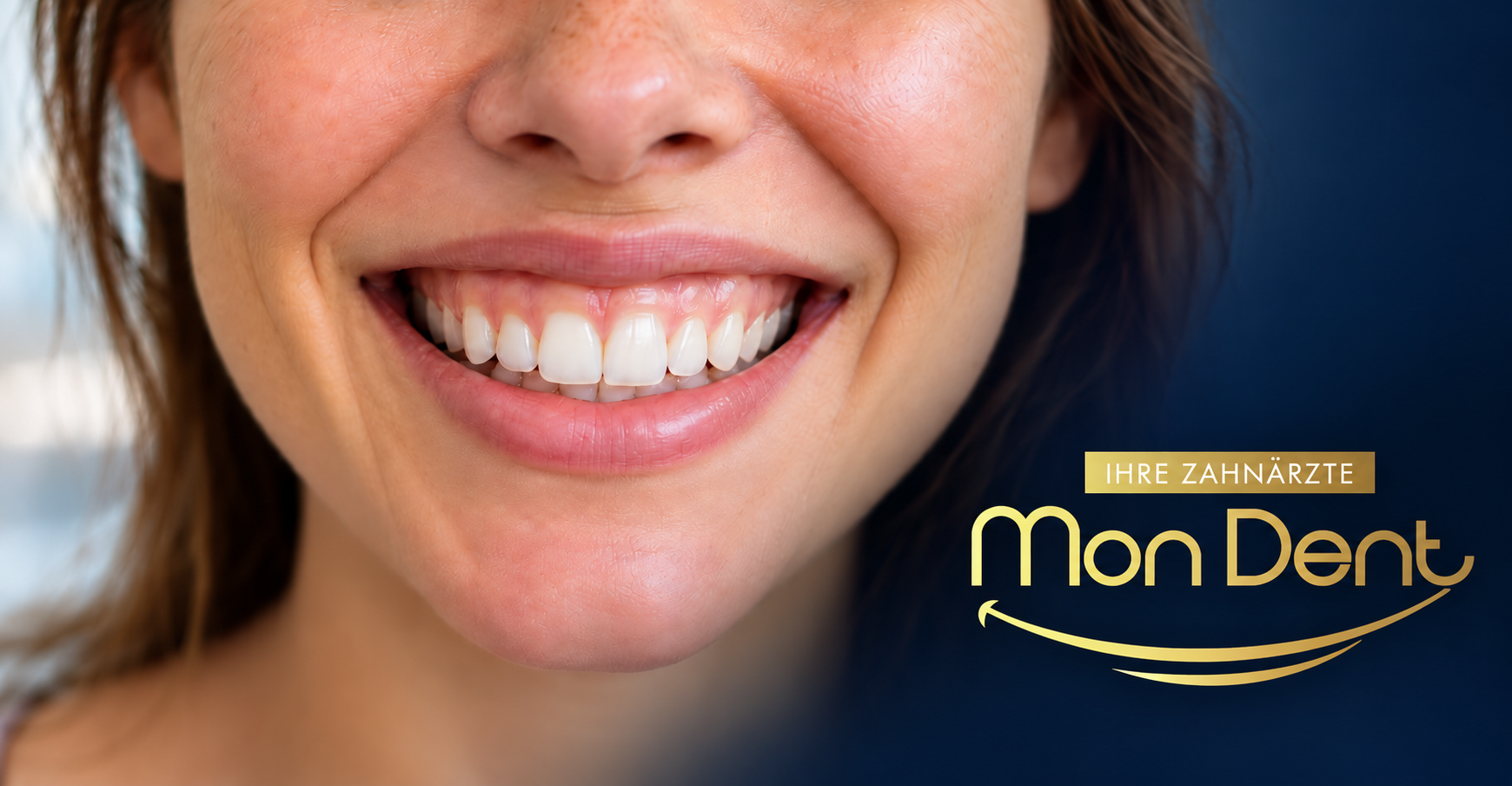
A gummy smile is a smile in which a more pronounced band of gums is visible above the upper teeth. This does not in itself mean that the teeth or gums are unhealthy.
Some people don't mind such a smile, while other patients want to reduce the visibility of their gums. The decision about aesthetic correction should stem from your wishes, along with a professional assessment of the possibilities.
How much gum is visible when you smile?
The dentist assesses the visibility of the gums along with the length of the teeth, the position of the lips and the proportions of the face. It is also important to observe a spontaneous smile, as it can differ from a smile in front of the mirror.
The measurement in millimeters alone is not enough to determine the need for treatment. The relationship of all these details is important.
Do protruding gums mean a health problem?
Not necessarily. However, if the gums are swollen, red, or bleeding, their health should be checked first. Aesthetic planning comes after the assessment and treatment of any inflammation.
You can find more about gum examination and treatment on the page periodontology and oral medicine.
Why do your gums show so much when you smile?
There can be various causes behind a similar appearance of a smile. Sometimes multiple factors are involved at the same time, so a combination of approaches is necessary.
The relationship between the gums and the visible part of the tooth
In some patients, the gums cover more of the tooth surface than expected, making the teeth appear short, even though their actual size may not be small.
The examination assesses where the enamel ends, the position of the gums, and how close the supporting bone is. This relationship determines whether correction is possible and what kind it would be.
Position and mobility of the upper lip
The upper lip lifts during a smile. When this lift is more pronounced, a larger area of gum is exposed.
In such a case, removing a portion of the gum may not be the right choice at all. It is necessary to assess the length of the lip, its movements and muscle activity.
Tooth position and structure of the upper jaw
Gum visibility may be related to the position of the front teeth or a more pronounced vertical development of the upper jaw.
Therefore, a gummy smile is not always a problem that can be solved only by the gums. If the cause lies in the teeth or jaw, an orthodontic assessment is an important part of the examination.
What does an assessment look like at the MonDent office?
The examination begins with a discussion about what is bothering you. Do you notice a lot of gum above all your front teeth? Is one side more prominent? Do you want a discreet change or is it more important for you to know the options?
What does the dentist look for during the examination?
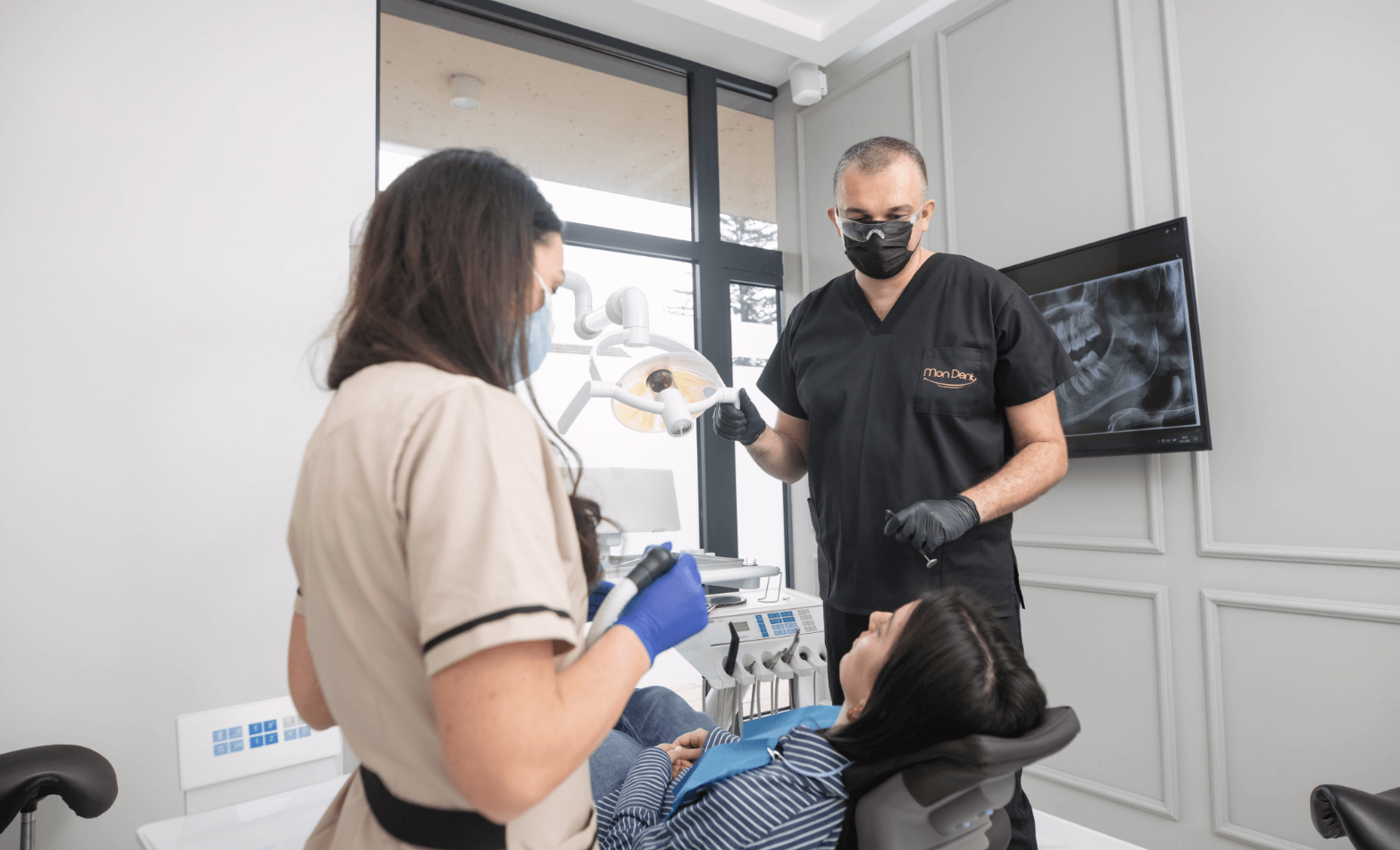
Gum health, tooth dimensions, bite, and lip position at rest and when smiling are assessed. Photographs and necessary diagnostics help to link the findings into a treatment plan.
Imaging is determined based on clinical need. A three-dimensional scan is not mandatory for every patient just because they are considering aesthetic correction.
The expertise of Dr. Ognjen Antešević and his careful approach to the patient
IN MonDent team is in charge of orthodontics Dr. Ognjen Antešević, specialist in jaw orthopedics, who has advanced his skills in domestic and international education. His field is especially important when the smile is affected by the position of the teeth and the relationship of the jaws.
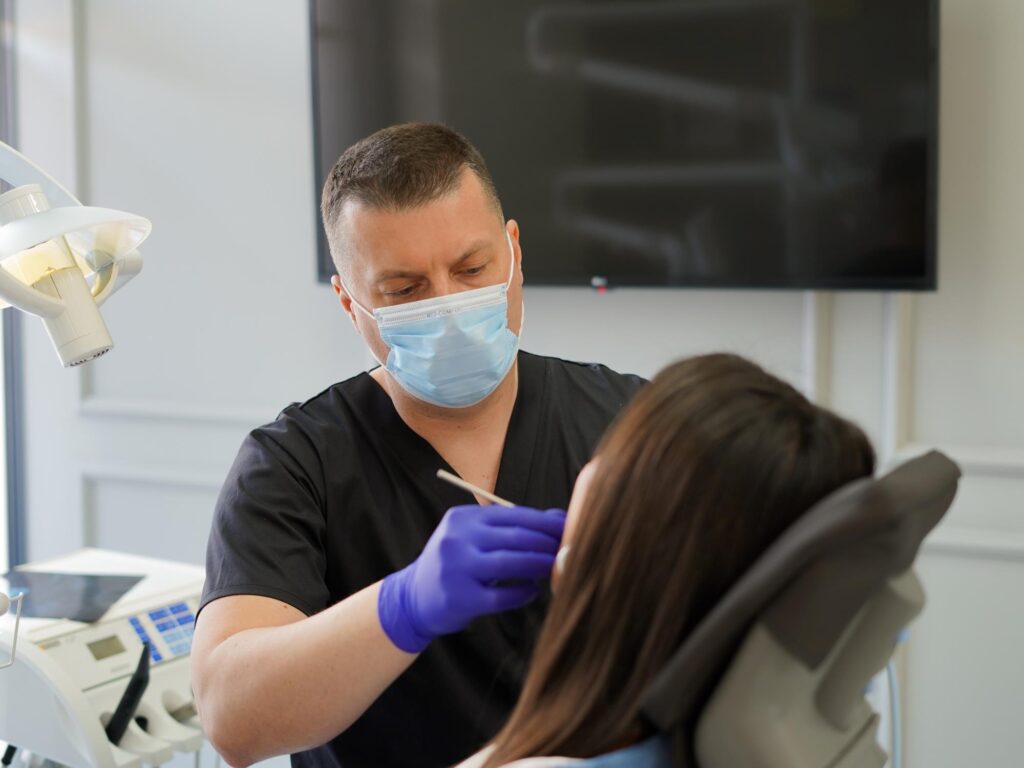
Our dentists are patient with each patient's questions and concerns. If you have any concerns about the procedure, please let us know before we begin. We will explain the suggested steps and discuss your options.
MonDent invests in modern technology and team training. Digital diagnostics facilitate assessment and planning, while the presentation of findings helps the patient understand the recommendation. The equipment supports professional work, and careful communication makes the examination more pleasant.
How is a gummy smile corrected?
Treatment is chosen based on the cause, tissue health, and the change that is realistic to achieve. A non-surgical method is not automatically the best, just as surgery is not necessary for everyone.
When is gum correction considered?
If the gums cover too much of the teeth, reshaping may be considered. Before doing so, the relationship between the gums and the bone should be assessed to preserve the health of the tissues around the teeth.
Removing part of the gum is a surgical procedure., even when performed with a laser. The term “no scalpel” does not mean there is no wound or recovery.
When can orthodontic therapy be part of the solution?
When tooth position contributes to the problem, orthodontic therapy can help change their relationship. In selected patients, the plan includes controlled tooth movement, sometimes with additional orthodontic appliances.
This approach requires time and follow-up. Braces or foils cannot solve every cause of prominent gum visibility.
What options are there when the cause is in the upper lip?
If the main cause is excessive lip lifting, botulinum toxin may be considered in appropriate patients. Its action temporarily reduces the activity of certain muscles.
The effect lasts for a limited time and gradually fades. This procedure does not change the structure of the jaw or remove excess gum. Possible side effects include asymmetry and changes in lip movement, so professional assessment and proper application are important.
Gummy smile surgery: when is it needed and what does it involve?
The search for "gummy smile surgery" includes different procedures. Their scope, preparation, and recovery are not the same.
Why isn't there one surgery for all patients?
For some patients, gingivectomy, or the removal of a portion of the gum, is sufficient. For others, lengthening of the clinical crown of the tooth with correction of the position of the tissue and, when justified, bone is required.
In selected cases, lip repositioning is considered. In cases of severe jaw structural irregularities, evaluation by a maxillofacial surgeon and a more complex treatment plan may be necessary.
How is an intervention plan prepared?
Before the intervention, your health condition, medications you are taking, and local findings are assessed. The dentist explains the expected change, alternatives, and possible risks.
It is important to know how many teeth or tissues the procedure involves and when the final result is estimated.
What does recovery depend on?
Recovery depends on the type and extent of the intervention. Sensitivity, swelling, and temporary changes in diet and hygiene are possible.
You will receive instructions tailored to the procedure. If the pain increases, you develop a fever, or bleeding does not stop according to the instructions you received, you should contact the office.
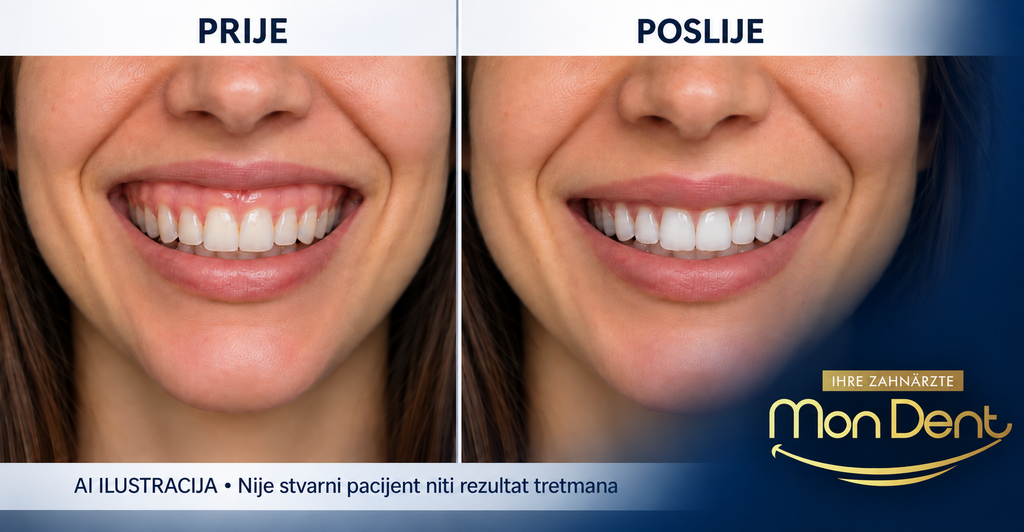
Gummy smile before and after: what do the before and after photos show?
Photos can help you understand what kind of change has been achieved, but only when you know what treatment was performed and when the result was photographed.
Note: The photo is for illustrative purposes only. as an illustration. It does not show an actual patient or the result of treatment at MonDent. Correction options and expected results are assessed individually, after the examination.
How to compare photos without having wrong expectations?
When reviewing gummy smile before and after examples, pay attention to the lighting, the angle of the shot, and the strength of the smile. A soft smile after treatment is not an equal comparison to a wide smile before it.
The photo immediately after the procedure also may not show the final appearance of the tissue.
Why isn't someone else's result a picture of your future smile?
Two patients may have similar gum visibility but different causes. Therefore, the photo serves as an aid in the conversation, not as a promise of identical results.
It is most helpful to explain what you like about the smile shown and ask if a similar change is possible in your case.
Gummy smile price: what is included in the correction costs?
The price of a Gummy Smile depends on the type of treatment, the extent of the procedure, and the preparation required. A single figure cannot describe the cost of botulinum toxin, orthodontic treatment, and surgical correction.
How does the type of treatment affect the price?
IN MonDent price list Gingivectomy is listed per tooth, while other services are billed by their categories. This is not a single price for a complete smile makeover.
The cost may include the examination, necessary diagnostics, preparatory treatment and follow-ups. In the case of temporary treatments, the possibility of recurrence should also be taken into account.
What should be clear in the offer?
Before making a decision, ask what is included, how many arrivals are expected, and whether there are any additional costs.
The offer should follow a specific plan. Only after the review does it make sense to discuss the amount that is appropriate for your case.
How long does the correction result last?
Durability depends on the chosen method and the cause of the problem. It is not the same to temporarily affect the mobility of the lip and to change the position of the tooth or the relationship of the gum to the tooth.
Temporary and long-term effects
The effects of botulinum toxin gradually wear off. To maintain the effect, new treatments may be necessary, along with reassessment.
Surgical and orthodontic approaches can provide longer-term changes, but even then it is not justified to promise that the appearance will never change.
Checkups and gum health
After therapy, it is important to maintain hygiene and attend scheduled check-ups. After orthodontic treatment, retention follows according to the orthodontist's instructions.
If the gummy smile is expressed again, the review shows whether it is an expected weakening of the effect or a change that needs to be further evaluated.
Conclusion
Gummy smile can be corrected without surgery when the cause and clinical findings allow for such an approach. In other patients, surgical correction or a combination of methods may be a more justified choice.
The most important thing is that you understand why a certain procedure is recommended, what kind of change you can expect, and how long the results last.
Make an appointment at MonDent clinic and talk to our team about your smile. You will have the opportunity to ask questions, explain expectations, and make a decision with clear information.
Frequently asked questions
Can a gummy smile be corrected without surgery?
It may be possible in certain patients. Botulinum toxin may temporarily help when excessive lip lift is the cause, while orthodontic therapy may be helpful when tooth position is contributing to the problem. An examination will determine the options.
Does the correction hurt?
It depends on the procedure. Surgical interventions are performed under appropriate anesthesia, while there may be sensitivity after the procedure. With injection treatments, short-term pain at the injection site is possible. Pain control is discussed before treatment.
Can veneers solve a gummy smile?
Veneers can change the shape and proportions of teeth, but they do not alone address excessive lip lift or jaw irregularities. It is not justified to replace healthy teeth without a clear assessment of the cause of gum visibility.
Can pronounced gum visibility be restored?
It is possible. With botulinum toxin, a relapse is expected when the effect wears off. After other procedures, stability depends on the diagnosis, the therapy performed, and individual healing. Check-ups help to monitor changes in a timely manner.


 BA
 DE
 SL
 EN
 ZH
 it_IT