




Content
- When all teeth are lost, what options really exist?
- Classic total denture, advantages and limitations
- Implant-supported dentures (overdenture)
- All-on-4 and All-on-6, a fixed solution that you don't remove
- Direct comparison: comfort, durability, maintenance, price
- Which solution for which life and financial situation?
- Total denture prices and payment options
- Frequently asked questions
- Conclusion
If you're missing all your teeth, a full denture is the quickest and cheapest solution, while implants are a more expensive but far more stable and long-lasting option. Which one is right for you depends on three things: your budget, the condition of your jawbone, and how much stability you want when eating and speaking. Below, we compare classic dentures, implant-supported dentures, and the fixed solutions All-on-4 and All-on-6, so you can make an informed and calm decision.
When all teeth are lost, what options really exist?
Losing all the teeth in one or both jaws is not just an aesthetic problem. It makes chewing difficult, changes speech, and over time affects the appearance of the face, as the jawbone without tooth roots gradually recedes. Therefore, choosing a solution is not only a matter of price, but also of the long-term health of the jaw.
This bone loss is why it is not worth delaying the decision for too long. The longer the jaw is without the load of roots or implants, the less bone there is to anchor more permanent solutions later. Early assessment therefore broadens the range of options available to you.
In practice, there are three realistic directions. The first is the classic complete denture that rests on the gums. The second is the implant-supported denture, which is attached to several implants. The third are fixed solutions such as All-on-4 and All-on-6, where the entire dental arch is supported on four or six implants and the patient does not remove them. Each solution has its place, and the difference lies in stability, durability and price.
Classic total denture, advantages and limitations
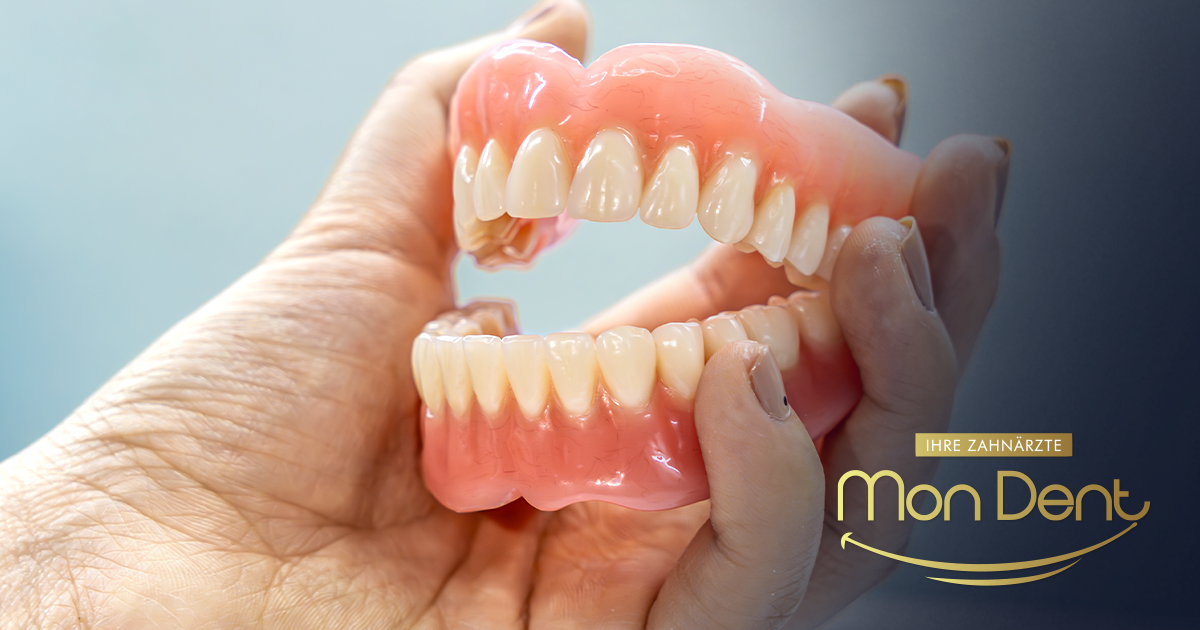
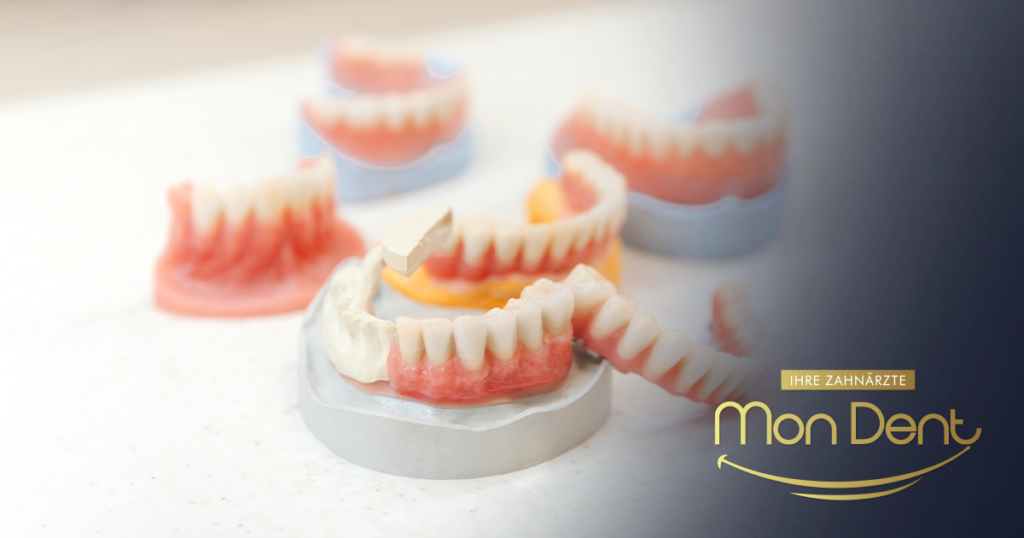
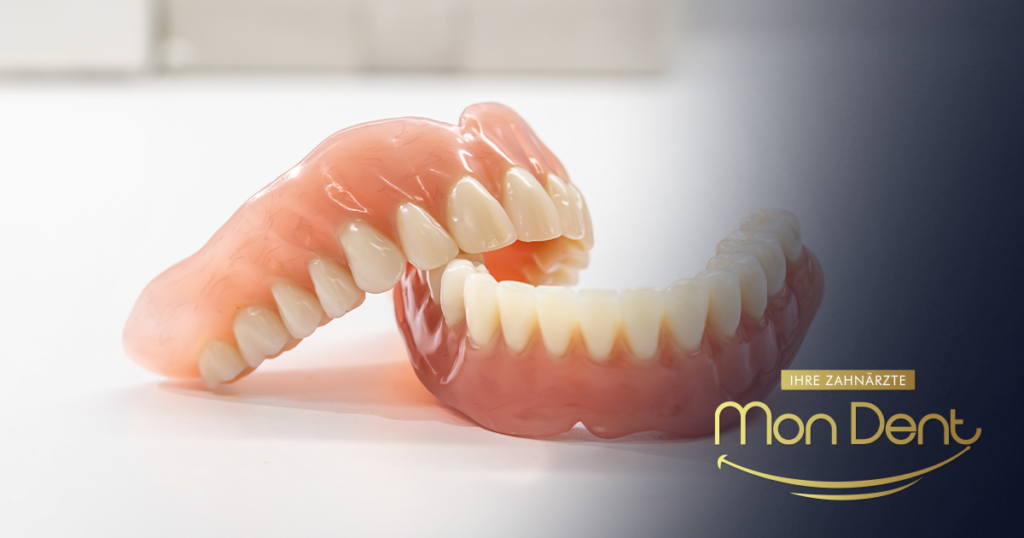
A classic complete denture is a removable restoration that replaces all the teeth in the jaw and rests on the mucous membrane and gums. An upper complete denture usually holds well because it covers the palate and creates a vacuum, while a lower denture is more challenging, as it has a smaller support surface and is constantly moved by the tongue.
The main advantages are clear. A complete denture is the most affordable solution, does not require surgical intervention and can be made relatively quickly. For many patients, it is a fully functional return to a smile and basic chewing function.
The limits, however, are real. Dentures can shift when eating harder foods, cause blisters in some patients until they break in, and require support as the bone beneath them changes over time. Most importantly, classic dentures do not stop bone loss, so they become less secure over time. The material also affects comfort: in addition to standard acrylic dentures, there is also a full silicone denture, which is softer on the gums and more comfortable for some patients.
Who is most suitable for
A classic full denture is a logical choice when the budget is limited, when the patient wants a solution without surgery, or when the health condition does not allow for surgery. It is also a good choice as a temporary solution while planning for implant placement. You can read more about the types of removable dentures in the guide on dentures.
Implant-supported dentures (overdenture), stability without slipping
Implant-supported dentures are a middle ground between classic dentures and a completely fixed solution. Instead of resting solely on the gums, they are “clipped” to two to four implants placed in the jaw using special connectors. The result is a denture that is still removable for cleaning, but stays in place and does not slip while worn.
This solution changes the daily life of patients suffering from unstable lower dentures the most. Implants take on the role of an anchor, eliminating the fear that the denture will fall out while talking or eating. In addition, implants transfer chewing forces to the bone and slow down its retraction, which is a great advantage compared to classic dentures.
The connection of the prosthesis and the implant is performed in two ways. In the first, individual button-shaped connectors (locators) are used, where each implant carries its own anchor. In the second, the implants are connected with a metal bar over which the prosthesis rests, which provides even stronger support. Which system is better depends on the number of implants and the condition of the bone, and the dentist chooses it after an x-ray.
The price is higher than for a classic prosthesis because it involves surgical implant placement, but it is usually lower than for a completely fixed solution. For many, this is the best balance of comfort and value for money. An additional advantage is that an overdenture is easily removed for thorough cleaning, making hygiene easier than with some fixed solutions.
All-on-4 and All-on-6, a fixed solution that you don't remove
If you want the closest feeling to natural teeth, fixed solutions are the top of the line. With the method All-on-4 The complete dental arch is supported on four implants, while All-on-6 uses six implants for even greater stability, especially when bone quality requires it. You do not remove the teeth, but they are maintained as your own, with regular check-ups.
The advantages are the highest chewing efficiency, stability and aesthetics, as well as the fact that implants preserve bone. In turn, it is the largest investment and a procedure that requires sufficient bone and good general health. In patients with bone deficiency, prior preparation is sometimes necessary, which is discussed in more detail in the text about implant placement in case of bone deficiency.
Direct comparison: comfort, durability, maintenance, price
To make the difference clear, compare the key parameters:
| Parameter | Classic total denture | Prosthesis on implants | All-on-4 / All-on-6 |
| Stability | Moderate, lower weaker | High, non-slip | The highest, like fixed teeth |
| Chewing | Limited to solid foods | Very good | Closest to natural |
| Bone preservation | Doesn't stop the pull | Slows down withdrawal | Best protects bone |
| Surgery | Not needed | Necessary, smaller | Required |
| Removal for cleaning | And | And | No, fixed |
| Price | Lowest | Medium | Highest |
No row in the table is an absolute verdict. A patient who rarely eats hard food and is looking for a cheap solution without surgery will be satisfied with a classic prosthesis. Those for whom stability is a priority and do not want the highest cost usually choose a prosthesis on implants. Those who want teeth that they do not even think about, go for a fixed solution.
Which solution for which life and financial situation?
The decision is easiest to make when you look at it through your everyday life, not just through the price.
If your budget is a major constraint or you can't afford surgery right now, a classic full denture restores function and your smile right away. If you're annoyed by a shifting lower denture and want a solution that lasts, an implant-supported denture offers the biggest leap in comfort for a reasonable price. If you want a long-term solution with the fewest compromises and are willing to invest more, All-on-4 or All-on-6 are the way to go.
It is worth thinking ahead. Investing in implants at the beginning can be more profitable in the long run, because classic dentures eventually require support and the creation of a new one, while implants preserve the bone and thus the appearance of the face. The assessment for your specific case is made by the team implantology based on the recording and review.
Total denture prices and payment options
The price of a complete denture depends on several factors: whether it is for one or both jaws, the material (standard acrylic or a softer, silicone variant), and whether the extraction of remaining teeth or preparation of the mucous membrane is required before fabrication. You will receive the exact amount for your case during the examination or in price list, because each reimbursement is planned individually.
When comparing costs, look at the whole picture. A classic full denture has the lowest initial cost, but over the years, there will be relining and eventual new fabrication. Implant-based solutions require a larger initial investment, but they last longer and preserve the bone better. At MonDent, payment for major procedures can be arranged in consultation with the practice, so you get the best plan through a consultation, not in advance from the internet.
Conclusion
There is no one best solution for everyone, there is one that suits your budget, jaw condition and lifestyle. A complete denture is an affordable and quick return to a smile, a denture on implants brings stability without a large cost, and All-on-4 and All-on-6 provide the closest feeling to natural teeth. If you are not sure what is for you, come for an examination at MonDent, where we will suggest a solution that makes sense today and in ten years, based on the scan.
Frequently asked questions
Is a total denture painful? The denture itself does not hurt, but in the first few days, blisters are possible until the mucous membrane gets used to it. Minor adjustments at the dentist quickly resolve these pressure points.
How long does a complete denture last? With good care, a classic prosthesis usually serves well for several years, after which, due to bone changes, relining or a new prosthesis is often necessary.
Can I switch from classic dentures to implants later? Yes. Many patients start with classic dentures and later switch to implant-supported dentures or a fixed solution when they are ready.
Do the upper and lower dentures fit equally? No. An upper complete denture usually holds better due to its support on the palate, while a lower one is more unstable, which is a common reason why patients opt for implants in the lower jaw.
What if I lack bone for implants? Sometimes bone preparation or augmentation is possible, and sometimes a smaller number of implants is more suitable. The dentist makes the assessment after the scan.
How quickly do I get my teeth back after having the remaining teeth extracted? It depends on the plan. With classic dentures, a temporary restoration is often made until the mucosa heals, while with fixed solutions, in some cases, it is possible to load the implant in the short term. You will receive the exact schedule during your consultation.
Does it take time to get used to fixed teeth on implants? The adjustment is usually short and easier than with removable dentures, because a fixed solution most closely resembles natural teeth in feel and function.


 BA
 DE
 SL
 EN
 ZH
 it_IT