









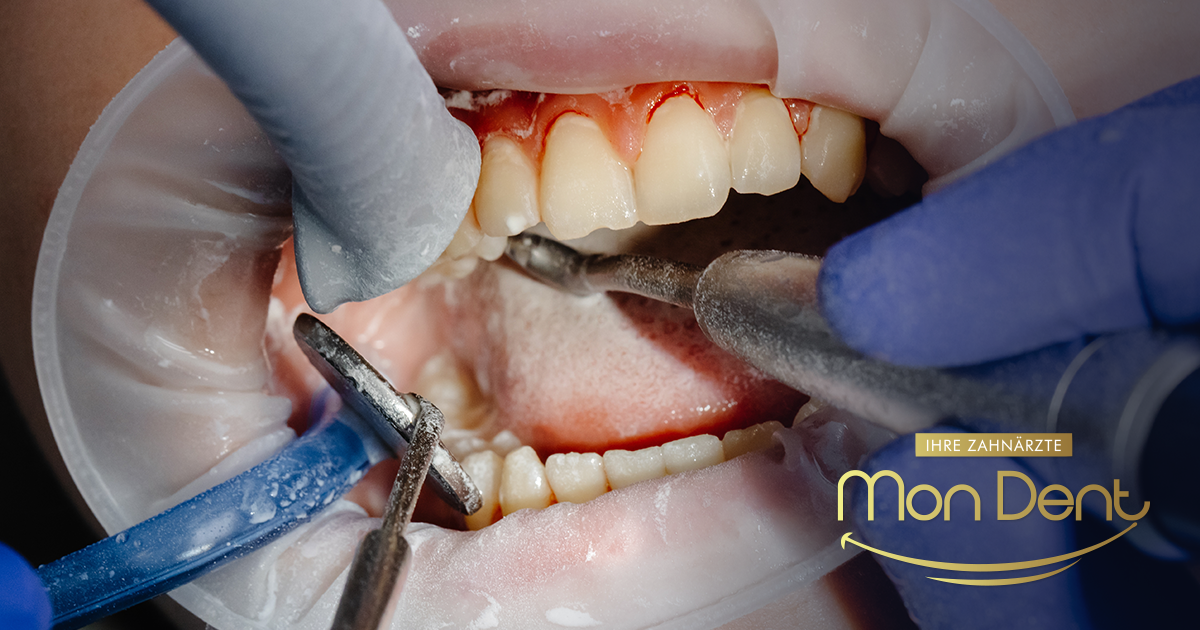
Apicoectomy is an oral surgical procedure that removes the tip of the tooth root along with the surrounding inflamed tissue, most often a granuloma or cyst. It is performed when root canal treatment has failed or is not possible, and the goal is clear - to preserve the natural tooth and avoid extraction.
The procedure is performed under local anesthesia, lasts between 30 and 90 minutes, and most patients return to daily activities within a few days. Below, we explain when a dental apicotomy is necessary, what exactly the procedure looks like, what you can expect during recovery, and what complications to watch out for.
What is an apicotomy?
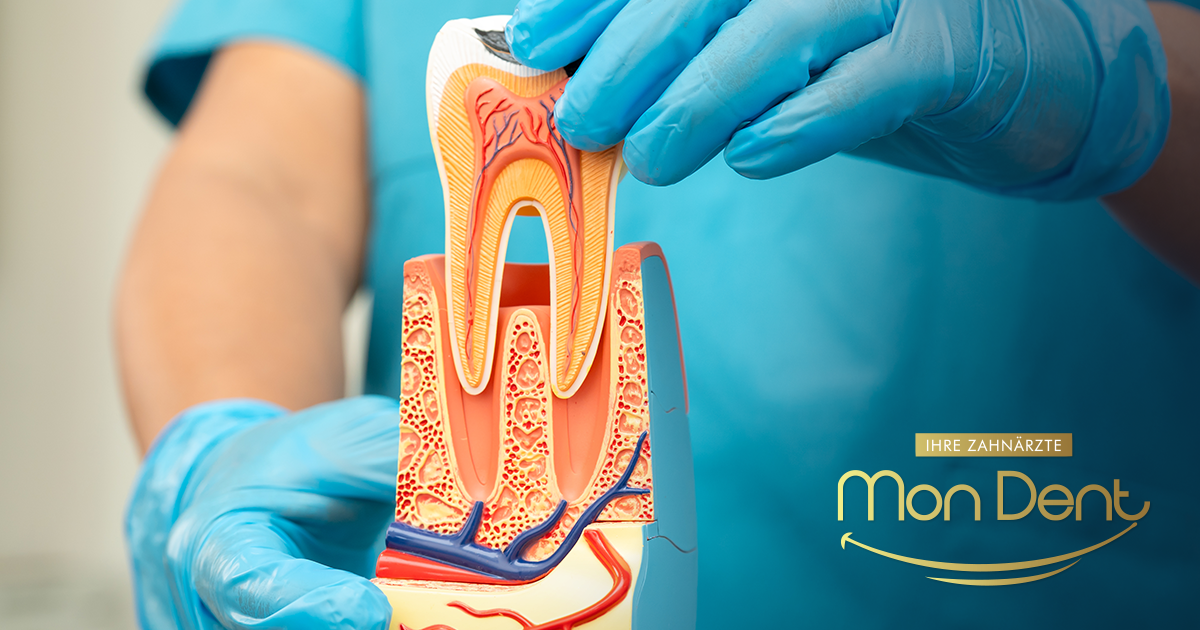
Each tooth is held in the jawbone by a root. Front teeth usually have one root, while premolars and molars have two or more. Nerves and blood vessels enter the tooth through the tip of each root. When bacteria penetrate the tip of the root due to deep decay, injury, or failed treatment, chronic inflammation occurs at that site.
Apicoectomy involves removing the last few millimeters of the root tip and all infected tissue around it. The root canal is then cleaned and sealed with a special filling to prevent new infection. Due to the precision it requires, the procedure is often called endodontic microsurgery.
It is important to distinguish between apicotomy and whole root resection. In an apicotomy, only the tip is removed, while the tooth and most of the root are preserved.
Glossary: what do technical terms related to apicotomy mean?
Term | Short explanation |
Apex | The tip of the tooth root through which nerves and blood vessels enter the tooth |
Granuloma | Chronic inflammatory change (nodule of inflammatory tissue) at the root tip |
Cyst | A fluid-filled cavity that forms around the tip of a root as a result of a long-term infection |
Endodontics | The branch of dentistry that deals with the treatment of root canals of teeth |
Retrograde filling | A filling that closes the canal from the side of the root apex, after its removal. |
Channel audit | Re-treatment of an already treated root canal |
When is a dental apicotomy necessary?
Apicoectomy is never the first choice. Before that, classical surgery is always tried. root canal treatment, and if necessary, canal revision. The procedure is recommended in the following situations:
- The inflammation returned after the root canal treatment. Root canals can have small side branches in which infected tissue remains even after thorough cleaning, so the infection does not go away or recurs.
- Channel revision is not possible. If the tooth has a crown, abutment, or is part of a bridge, reopening the canal would require removing the prosthetic work and could permanently damage it. An apicotomy then resolves the inflammation without touching the crown or bridge.
- There is a granuloma or cyst at the tip of the root. Chronic changes that do not respond to conservative treatment are surgically removed, along with the root tip. We wrote in detail about how it occurs and how dangerous it is in our blog. Is a cyst on a tooth dangerous?.
- Anatomical obstructions in the canal. Curved canals, broken instruments in the canal, or calcifications can prevent treatment through a dental crown.
The only realistic alternative to apicotomy in these cases is usually tooth extraction. Preserving the natural tooth is always the first choice, which is why apicotomy is rightly called a tooth-saving procedure.
What does an apicotomy look like, step by step
Before the procedure, a detailed diagnosis is performed. Based on the X-ray, the position of the root, the size of the inflammatory process and the relationship to the surrounding structures are assessed. At the MonDent dental office, each patient receives a free 2D/3D X-ray, performed on the latest generation of devices with minimal radiation, which allows for precise planning of the procedure.
The procedure itself oral surgery it goes like this:
- Local anesthesia. The area around the tooth is completely numbed, so you do not feel any pain during the procedure.
- Access to the root. A small incision is made in the gum and the mucosa is lifted so that the surgeon can reach the bone and the tip of the root.
- Removal of the root tip and inflammation. The last few millimeters of the root are removed along with the granuloma or cyst and all infected tissue.
- Cleaning and closing the canal. The end of the canal is cleaned and hermetically sealed with a retrograde filling that prevents the re-introduction of bacteria.
- Sewing. The wound is sutured, and a control scan confirms that the procedure was successfully completed.
The procedure takes an average of 30 to 90 minutes, depending on the position of the tooth and the complexity of the root. It is completed in one visit, and the stitches are removed after approximately seven days.
Is apicotomy painful?
You will not feel any pain during the procedure because it is performed under local anesthesia, just like with classic surgery. dental and root canal treatmentAfter the anesthesia wears off, it is normal to experience mild to moderate discomfort and swelling, which is most pronounced in the first 24 to 48 hours. In most patients, the discomfort is successfully controlled with standard analgesics and gradually resolves over the next few days.
Recovery after apicotomy
Recovery after apicotomy is in most cases quick and predictable. Most patients return to normal activities the very next day. The gums heal within one to two weeks, while the bone around the root is fully restored over the following months, which is monitored by follow-up radiographs.
The recovery process looks like this:
Period | What can you expect? |
The first 24-48 hours | Swelling and discomfort are most pronounced; cold compresses and prescribed analgesics help |
3-5 days | Symptoms subside; return to lighter daily activities |
7 days | Check-up and removal of stitches |
1-2 weeks | Complete healing of soft tissues (gums) |
A few months | Bone regeneration around the root apex, monitored by control scans |
To ensure a smooth recovery, follow these recommendations:
- On the first day, apply cold compresses to your cheek at intervals to reduce swelling.
- Take prescribed medications exactly as directed by your surgeon.
- For the first 2-3 days, eat softer, lukewarm food, and switch chewing to the opposite side.
- Avoid smoking and alcohol, as they slow down wound healing.
- Avoid heavy physical exertion and sports for at least 3-4 days.
- Brush your teeth carefully, avoiding the wound for the first few days, and rinse your mouth as recommended by your surgeon.
Apicoectomy and sick leave: how many days does it take to return to work?
This is one of the most common questions patients ask. Most people who work in an office can return to work after one to two days, once the swelling and discomfort have subsided. If your job involves heavy physical labor, a three to five day break is recommended, as exertion can increase swelling and bleeding.
The length of sick leave is determined individually. It depends on the scope of the procedure, the course of recovery, and the nature of the work, and you decide on this in consultation with your surgeon and family doctor.
Possible complications after apicotomy
Apicoectomy is a routine procedure with a high success rate, but like any surgical procedure, it carries certain risks. Possible complications include:
- Swelling and bruising – expected and transient tissue reaction, resolves within a few days.
- Bleeding – slight bleeding on the first day is normal; heavier or prolonged bleeding requires reporting to the surgeon.
- Wound infection – rare with proper oral hygiene and following instructions.
- Opening the sinuses – in the case of upper lateral teeth, the root may be close to the maxillary sinus, so the procedure is carefully planned based on the 3D scan.
- Numbness – in the lower teeth near the nerve, a temporary change in sensation is possible, which usually resolves.
- Failure of the procedure – if the inflammation still returns, a repeat procedure or tooth extraction and replacement with an implant is considered.
The key to preventing complications is accurate pre-operative diagnosis and an experienced surgeon. A detailed 3D scan allows the position of the roots, sinuses and nerves to be accurately determined before the procedure even begins.
Apicoectomy or tooth extraction: which is the better choice?
When root canal treatment fails, patients often hesitate between apicotomy and tooth extraction. A comparison of the most important differences:
Criterion | Apicoectomy | Tooth extraction |
Natural tooth | It remains preserved. | It is lost permanently. |
Additional costs | No need for tooth replacement | Need an implant, bridge or denture? |
Duration of the solution | One procedure in one visit | More visits for tooth restoration |
Adjacent teeth | No influence | Risk of displacement of adjacent teeth |
When choosing | When the tooth and bone can withstand the procedure | When a tooth is cracked or too damaged |
When the tooth can be saved, apicotomy is the more rational choice. If the tooth still has to be extracted, modern implantology offers permanent and functional restorations, and implantology is one of the main focuses of the MonDent practice.
Conclusion
If you have been recommended an apicotomy or suspect inflammation of the tip of the tooth root, do not delay the examination. Untreated infection spreads over time and can lead to tooth loss. At the MonDent dental office in Banja Luka, we perform apicotomy using advanced treatment methods, in a modern environment and with the latest dental equipment, and each patient receives a free 2D/3D X-ray with minimal radiation - the basis for precise diagnostics and safe procedures.
If a tooth requires a new crown or other prosthetic work after an apicotomy, there is our expert team headed by Dr. Mladen Popović, a dentist with extensive international experience gained in Belgrade and Düsseldorf, specializing in modern prosthetics and aesthetic dentistry.
Schedule an appointment by calling 051 240 677, writing to us at info@mondent.ba or contact via the websiteWe are located at Milana Radmana 47, Nova Varoš, Banja Luka.
Frequently asked questions about apicotomy (FAQ)
How long does an apicotomy take?
The procedure lasts between 30 and 90 minutes and is completed in one visit.
Is apicotomy performed under general anesthesia?
No, the procedure is usually performed under local anesthesia and is completely painless.
What can I eat after an apicotomy?
For the first few days, softer, lukewarm foods are recommended - soups, porridge, yogurt, purees. Avoid hot, hard, and spicy foods.
How long does recovery take after an apicotomy?
The gums heal in one to two weeks, and the stitches are removed after seven days. The bone around the root is completely regenerated over the following months.
Can a tooth last a lifetime after an apicotomy?
Yes, a successfully treated tooth with regular check-ups and good hygiene can last just like any other tooth.


 BA
BA DE
DE SL
SL EN
EN ZH
ZH it_IT
it_IT