










Content:
- Wisdom teeth are like teeth we don't need
- Do wisdom teeth have to be removed?
- What does wisdom tooth extraction look like?
- Conclusion
Wisdom tooth extraction is not always necessary. If the wisdom tooth is erupting properly and is not causing any problems, there may be no need to remove it. On the other hand, if you experience pain in the back of your jaw, swelling, or frequent inflammation, it is best not to wait and call your dentist and schedule an appointment so that the dentist can have a better insight into your current situation and give you a solution.
Studies show that up to 80% of young people in Europe have at least one wisdom tooth that has not fully grown. Such impacted wisdom tooth can remain in the jaw, but it often causes problems. That's why it's important to know when wisdom teeth need to be removed and who to contact. Below, we'll explain when wisdom teeth can cause you problems.
Wisdom teeth like teeth we don't need?
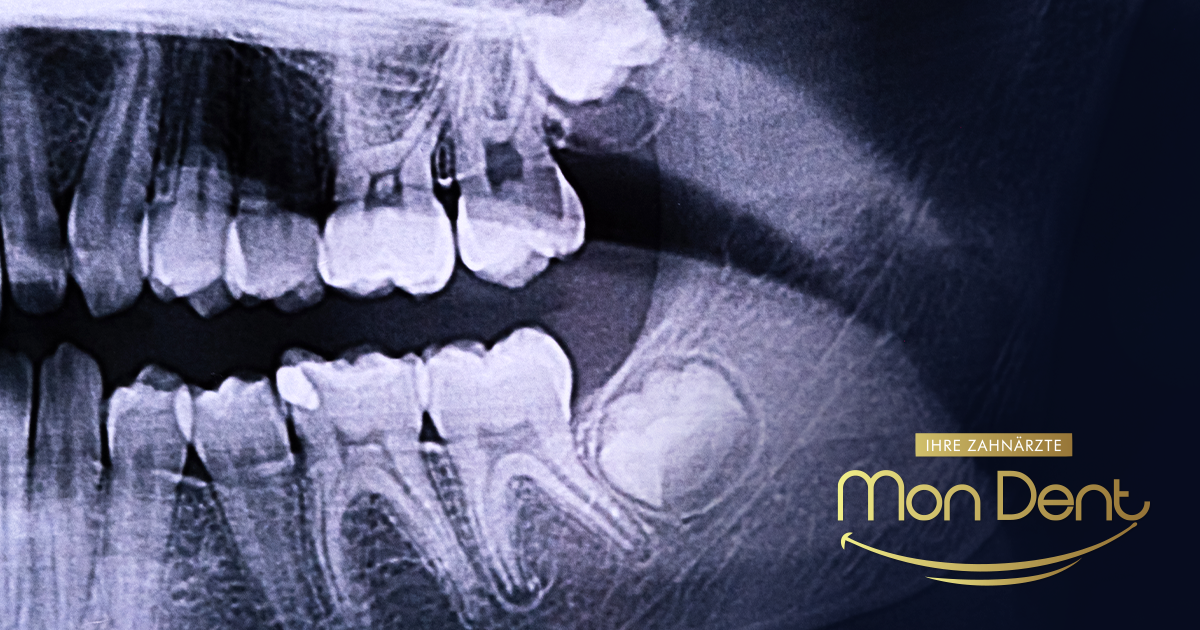
Wisdom teeth are the third molars that usually erupt between the ages of 17 and 25. They are also called “figure eights” because they occupy the eighth position in the mouth. In many patients, wisdom teeth grow at an unfavorable angle or do not have enough space around them, so they are prone to being impacted. impacted (undeveloped) or that they cause various problems.
Wisdom teeth are an evolutionary remnant of teeth. which we once needed to chew raw food. Today, most people chew prepared food well, so they often don't have enough room for wisdom teeth.
At MonDent, our dentists thoroughly examine your wisdom tooth, using modern methods and X-rays, and if necessary, remove it in a safe and painless manner, taking into account your comfort throughout the procedure.
When do wisdom teeth grow?
Wisdom teeth usually appear between the ages of 17 and 25. Sometimes, as they erupt, they can cause a sensation in the gums or slight pressure on the surrounding teeth. Because they are the last teeth in the jaw, they often don't have enough room to grow in properly.
If a wisdom tooth breaks through the gum in the wrong position or only partially erupts, the gums can become inflamed and painful. The areas under an under-erupted wisdom tooth are difficult to reach with a toothbrush, so food debris and bacteria quickly accumulate, leading to cavities and infection. This is why impacted or partially erupted wisdom teeth are often associated with gum inflammation (pericoronitis) and bad breath.

If you notice that the gums around your wisdom teeth are bleeding, swollen, or the buzzing pain has become frequent, be sure to see your dentist. Based on a clinical examination and X-ray (which MonDent office works with) with minimal radiation), experts will assess the position of the wisdom tooth. Often, the inflammation is first removed (with antibiotics or local antiseptics), and then extraction is planned at the optimal time. Simply put, if the wisdom tooth is causing symptoms or threatening to damage surrounding teeth, it is better to remove it than to wait for complications.
Do wisdom teeth have to be removed?
Wisdom tooth extraction is not always necessary, but it becomes crucial when certain symptoms and risks arise. Below are the most common reasons why dentists recommend wisdom tooth extraction:
- Impacted or tilted wisdom tooth
A wisdom tooth that cannot erupt normally (partially or completely trapped under the gums or bone) can easily cause pain and swelling. Such a tooth often damages the surrounding teeth or bone, and can also lead to a cyst in the jaw.
- Pain and inflammation
Persistent inflammation around the wisdom tooth (pericoronitis) or occasional severe pain in the corner of the jaw are signs that the wisdom tooth is causing a problem. Also, cavities and gum inflammation around the wisdom tooth often recur because it is difficult to clean thoroughly.
- Pressure on other teeth
If there is not enough space in the jaw, the new wisdom teeth can put pressure on the teeth in front of them. This often causes teeth to shift, crowd, or misalign.
- Sinus problems
Upper wisdom teeth sometimes grow close to the sinuses and can create pressure. This can lead to nasal congestion, headaches, and a feeling of fullness in the sinuses.
- Bad breath and infections
Hard-to-reach wisdom teeth make it easy for bacteria to accumulate. This can cause persistent bad breath and spread infections to surrounding teeth. In the long run, the infection can spread to other parts of the body if left untreated.
If none of these problems occur, i.e. the wisdom teeth grow in normally and painlessly, extraction may not be necessary. However, the decision must be made by your dentist based on the examination and x-rays. Experts sometimes recommend extraction before problems occur, in order to preserve oral health in the long term.
What does wisdom tooth extraction look like?
Today wisdom tooth extraction in a well-equipped office, it is routine and mostly painless. The procedure usually begins with local anesthesia, which completely eliminates pain during the intervention. If the tooth is more complex or the patient is very tense, sedation or general anesthesia can be offered - all for your comfort and to minimize stress. Our expert team at MonDent office strives to organize the procedure so that the patient is as calm as possible.

Before the extraction, the dentist will take an X-ray of the tooth. MonDent uses the most modern digital X-ray with very with minimal radiationThis scan allows the dentist to precisely determine the position and shape of the wisdom tooth, as well as the proximity of nerve endings and sinuses. This significantly reduces the risk of complications.
Extraction procedure and recovery
The procedure itself can last from a few minutes to an hour, depending on the case. In a simple extraction (when the wisdom tooth is easily accessible), the tooth is removed without an incision. If the wisdom tooth is completely retained in the bone, the dentist will make a small incision in the gums and possibly separate the tooth into parts to make it easier to remove. Finally, the wound is cleaned and, if necessary, sutured. After the procedure, a cold compress is applied in a dosed manner, the patient is advised to rest and a light diet is prescribed while the wound heals.
After wisdom tooth extraction, you may experience mild swelling of the cheek and minor discomfort for a few days. That is why we will provide you with clear instructions for wound care: for example, how and how often to rinse your mouth, what painkillers to take and what dressings to use. It is important to avoid prolonged drinking through a straw or straining for the first 24 hours, and not to smoke. Usually, the stitches dissolve on their own within a week or two. In any case, MonDent dentists monitor your recovery – we are always available for control and advice if unexpected problems arise such as severe pain or prolonged bleeding.
Conclusion
Wisdom teeth themselves are not always a problem, but they can become a source of pain, infection, and displacement of other teeth if they do not have enough space or grow in incorrectly. That is why it is crucial to have regular dental checkups and listen to expert advice.
If you experience any pain, swelling, or suspicious symptoms in the back of your mouth, it's best to act quickly. A professional dentist will use X-rays to determine if and when wisdom teeth should be removed. At MonDent, we have the experience and modern equipment to safely remove wisdom teeth. stress-freeDon't wait for the problem to get bigger. Schedule an appointment at MonDent and let our dentists provide the best care for your wisdom teeth.


 BA
BA DE
DE SL
SL EN
EN ZH
ZH it_IT
it_IT